
A pile of sawdust near a window frame can make any homeowner worry about termites. In South King County, though, carpenter ants are often the more likely culprit. The carpenter ants vs termites question matters because both can damage wood, but they leave different clues, create different risks, and need different treatment plans.
If you are seeing large black ants, winged insects, loose wood, or debris around your home, do not wait for the damage to become obvious. A professional inspection can identify the pest and the conditions that brought it inside.
Carpenter Ants vs Termites: The Main Difference
Carpenter ants and termites both live in or near wood, but they do not behave the same way. Carpenter ants excavate wood to create smooth nesting galleries. They do not eat the wood. Termites feed on cellulose, the material found in wood, paper, cardboard, and some other building materials.
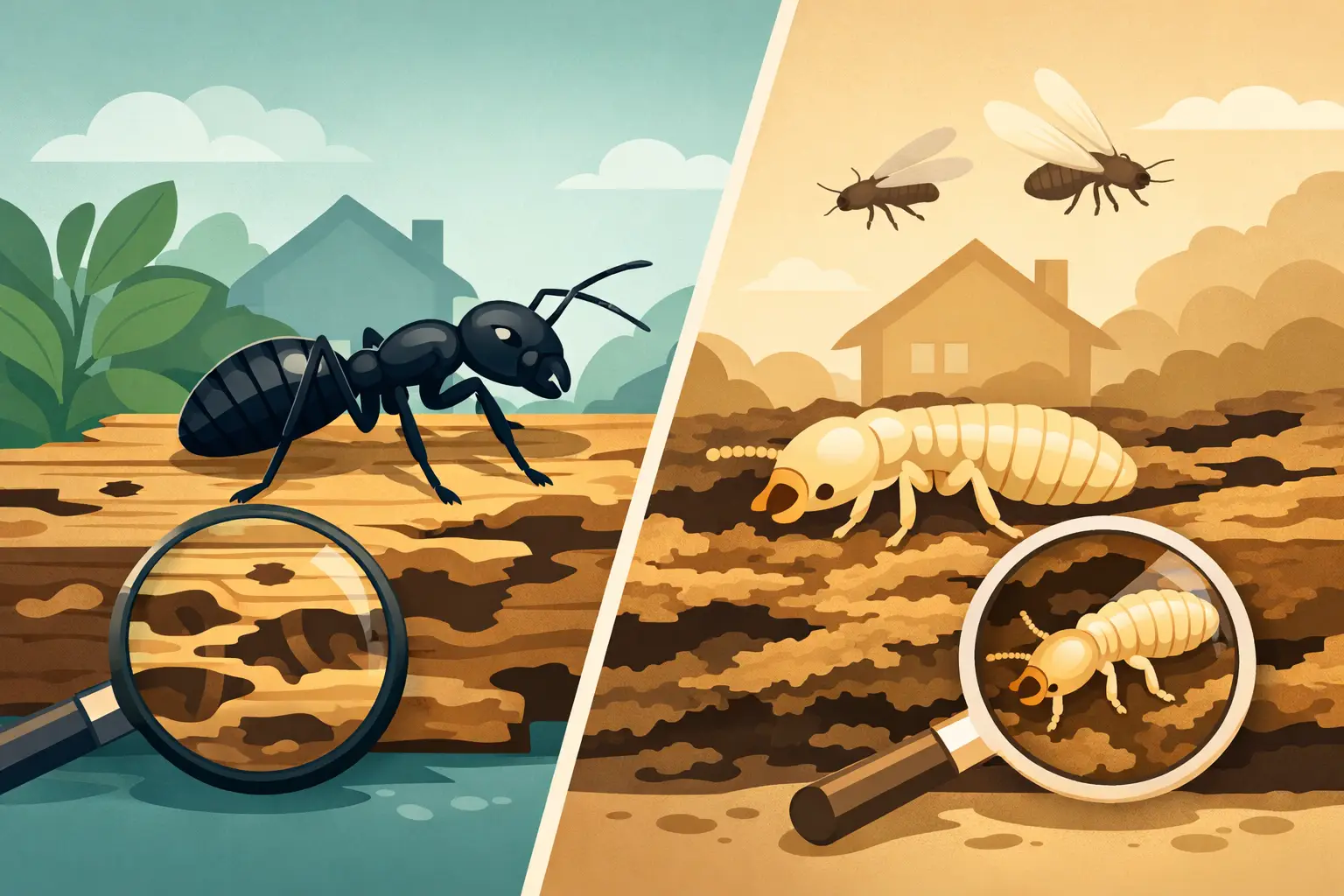
That difference affects the damage you may find. Carpenter ant damage often looks clean and sanded inside, with tunnels that follow the grain of the wood. Termite damage can leave wood looking layered, hollowed, or packed with soil. Neither pest is a problem to ignore, especially when activity is inside walls, crawlspaces, decks, or structural framing.
In the Pacific Northwest, carpenter ants are a frequent concern because they are drawn to damp or previously damaged wood. A roof leak, plumbing leak, clogged gutter, poor drainage, or wood-to-soil contact can create ideal conditions. Termites can also damage homes in Washington, so it is better to identify the pest based on evidence rather than assumptions.
How to Tell Them Apart
The clearest differences are in the insects themselves. Carpenter ants are larger than most termites and usually appear black, reddish-black, or dark brown. They have a narrow, pinched waist and elbowed antennae. Worker carpenter ants commonly range from about one-quarter inch to more than one-half inch long.
Termites have straighter antennae and a broad, more uniform body shape without the pinched ant waist. They are often pale, cream-colored, or brown, depending on the species and caste. The workers that cause damage typically stay hidden, so homeowners are more likely to see swarmers than active termite workers.
Winged insects can be confusing because both carpenter ants and termites produce reproductive swarmers. Look closely if you can do so safely. Flying carpenter ants have unequal wing pairs, with larger front wings. Termite swarmers have four wings that are similar in size and shape. Still, a few shed wings or a quick photo rarely tells the full story. An inspection is the safest way to confirm what you have.
The debris they leave behind
Carpenter ants push debris out of their galleries. You may find coarse, sawdust-like material called frass below a wall void, windowsill, baseboard, or exposed beam. It can include tiny wood fragments, insect parts, and bits of insulation. This is one of the strongest signs that carpenter ants are actively nesting nearby.
Subterranean termites are more likely to leave mud tubes along foundation walls, crawlspace supports, pipes, or other surfaces connecting soil to wood. These pencil-sized tubes help them travel while staying protected from air and predators. Break a small section only if necessary for inspection, then have a professional assess the area. An empty tube does not always mean the infestation is gone.
Drywood termites can leave pellet-like droppings, but they are less commonly the termite concern for local homeowners than subterranean termites. Because conditions and species vary, debris alone should not be treated as a final diagnosis.
Which Pest Causes More Damage?
Termites generally pose the greater long-term structural risk because they consume wood continuously and can remain hidden for an extended period. A large, untreated colony may damage framing, subfloors, trim, and other cellulose-based materials before visible warning signs appear.
Carpenter ants can also cause significant damage when a colony has been active for years or when multiple satellite nests are present. Their tunnels can weaken already compromised wood, particularly around moisture problems. They often take advantage of decay rather than creating it from scratch, which is why finding carpenter ants can be an early warning that your home has a leak or moisture issue worth fixing.
The practical answer is that it depends on the extent of activity and the location. Carpenter ants in a firewood pile outside need a different response than ants nesting in a wet wall near a bathroom. Termite activity near a foundation or crawlspace deserves prompt attention even if the visible damage looks small.
Signs You Should Schedule an Inspection
Do not rely on one sign alone. Pest activity is often hidden behind drywall, siding, insulation, or flooring. Schedule an inspection if you notice repeated large ants indoors, winged insects near windows, sawdust-like debris, mud tubes, bubbling paint, soft wood, doors that suddenly stick, or unexplained damage to trim and framing.
Spring and early summer are common times to notice swarmers, but carpenter ants and termites can remain active outside those seasons. A warm interior, moisture source, and protected nesting area can keep a problem going year-round.
For property managers and business owners, early action is especially valuable. A pest concern in a multifamily property, restaurant, office, or retail space can affect tenants, customers, and your building’s reputation. Fast identification helps limit disruption and makes repairs more manageable.
Why Store-Bought Treatment Often Falls Short
A spray may kill the ants or insects you can see, but it may not reach the nest, satellite colonies, or the moisture condition supporting the problem. Carpenter ant colonies can extend into wall voids, insulation, rotting wood, or nearby trees and stumps. Treating only a visible trail often leads to more activity later.
Termite control requires an even more targeted approach. The treatment method depends on the termite species, construction of the building, location of activity, and whether there is a soil connection. Applying the wrong product in the wrong place can delay proper treatment while the insects continue moving out of sight.
Professional pest control also looks beyond the immediate insects. The goal is to identify entry points, nesting conditions, damaged areas, and moisture issues that could attract future pests. Exclusion and repairs can be just as valuable as treatment for preventing a repeat problem.
What to Do While You Wait for Help
Avoid disturbing a suspected nest or spraying directly into holes in wood. That can cause carpenter ants to relocate and may make the source harder to find. Instead, take clear photos of insects, wings, tubes, or debris if possible. Note where and when you saw activity.
Keep the area dry by addressing obvious leaks and removing standing water. Move firewood, lumber, cardboard, and other cellulose materials away from the foundation. Trim branches and vegetation so they are not resting against the home, and keep mulch and soil from covering siding or wood components.
These steps can reduce favorable conditions, but they are not a substitute for treatment when insects are already established indoors. Do not assume activity has stopped simply because you no longer see ants or swarmers for a few days.
Get a Clear Answer Before Damage Grows
When you are weighing carpenter ants vs termites, the right answer starts with a careful inspection, not guesswork. Plateau Pest helps homeowners and businesses across Kent, Covington, Maple Valley, Auburn, Renton, Bellevue, South Seattle, and surrounding South King County communities identify wood-damaging pests and build a practical plan for treatment and prevention.
If something is tunneling through the wood in your home, acting early protects more than the structure. It protects the comfort of the people who live and work there – and gives you a clear path forward before a small sign becomes a larger repair.