
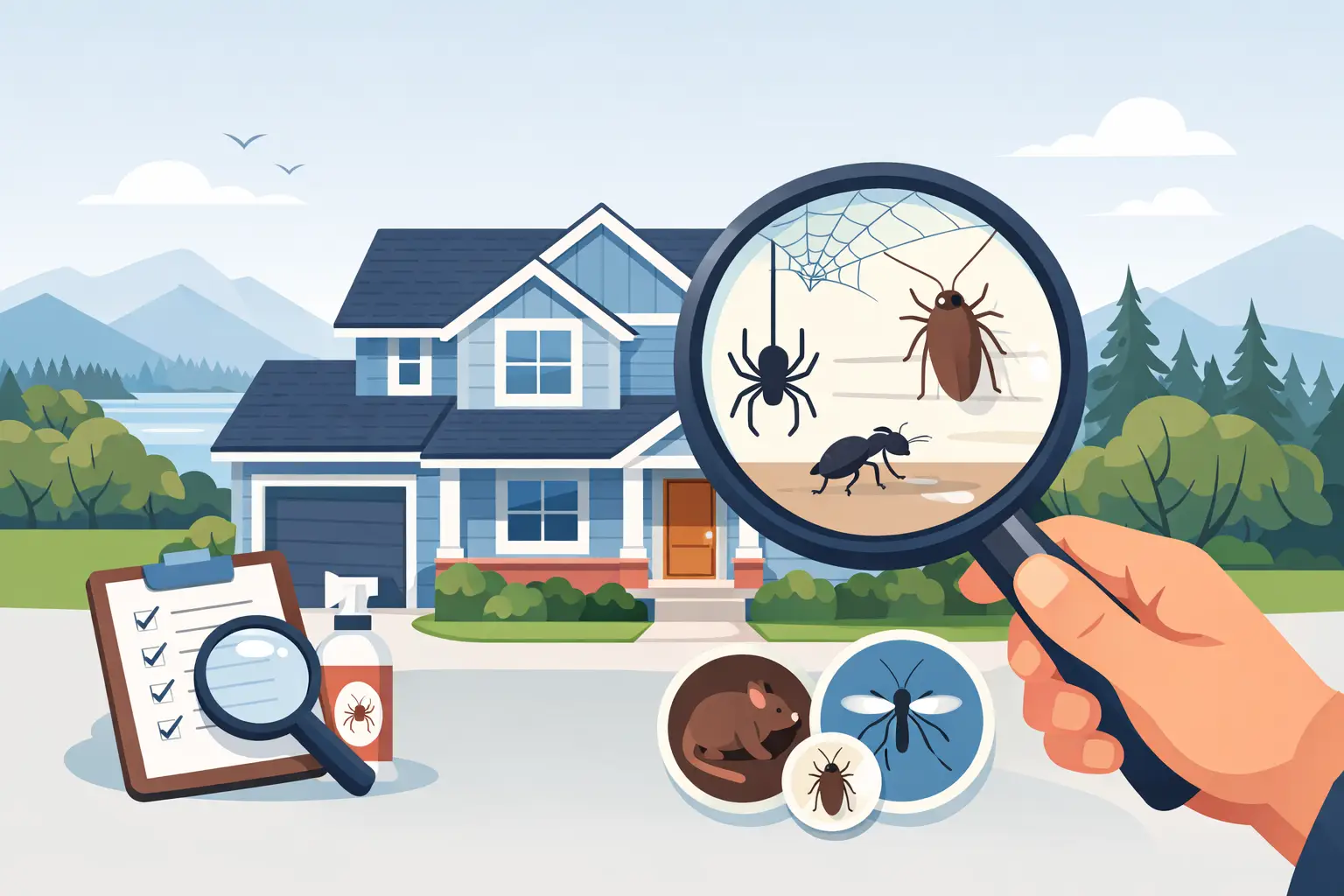
A few ants near the kitchen sink or scratching sounds above the ceiling can seem minor at first. In South King County, though, pests often use damp weather, wooded lots, crawl spaces, and small structural gaps to settle in fast. This home pest inspection guide helps you look for the signs that matter, identify conditions attracting pests, and know when it is time to bring in professional help.
You do not need special equipment to catch many pest issues early. A flashlight, gloves, a notepad, and a willingness to inspect areas that are easy to overlook can reveal a lot. The goal is not to diagnose every insect or seal every hole yourself. It is to find the clues before pests damage your home, contaminate food, or become harder to remove.
Start Outside: Your Home’s First Line of Defense
Begin at the foundation and walk slowly around the entire home. Look closely at where siding meets the ground, where pipes or utility lines enter, and around doors, windows, vents, and the garage. Mice can fit through openings about the size of a dime, while insects can use much smaller cracks.
Pay attention to vegetation and moisture. Shrubs, ivy, stacked firewood, leaf piles, and mulch pushed against the house create protected pathways for ants, spiders, rodents, and other pests. Trim branches and bushes away from the siding when possible, and keep firewood elevated and stored away from the home.
Check gutters, downspouts, and drainage while you are outside. Overflowing gutters and standing water near the foundation can attract mosquitoes and support moisture-loving pests. They can also contribute to damp conditions in crawl spaces or basements, which may make your home more appealing to ants, rodents, and wood-damaging insects.
Look up, too. Wasp activity around eaves, soffits, sheds, decks, or attic vents may signal a developing nest. A few wasps passing through the yard are normal. Repeated traffic into one opening is different. Avoid poking at a nest or spraying it from a ladder. Wasps can become defensive quickly, especially later in summer.
Home Pest Inspection Guide: What to Check Room by Room
Once outside is complete, move through the interior in a consistent order. Inspect slowly and take photos of anything unusual. Pest signs are easier to track when you can compare what you saw last week with what you are seeing now.
Kitchen and pantry
The kitchen offers food, water, and shelter, so it is one of the first places to inspect. Check under sinks for leaks, water staining, droppings, insect activity, and gaps around plumbing. Look inside cabinets, behind small appliances, and along countertop edges for ants, cockroach droppings, shed skins, or greasy-looking trails.
Open dry-food containers and inspect pantry shelves. Rodents may leave gnaw marks, torn packaging, or small dark droppings. Pantry moths and beetles can appear as webbing, tiny larvae, or insects inside flour, cereal, pet food, and other stored products. If you find a contaminated item, seal it in a bag and remove it from the home before thoroughly cleaning the shelf.
Bathrooms and laundry areas
Bathrooms, utility rooms, and laundry spaces often have hidden moisture. Check behind toilets, beneath sinks, around washing machine hoses, and near floor drains. Ants may follow water sources, while cockroaches can hide in warm, humid voids around plumbing.
A musty smell, recurring condensation, or soft material around a fixture deserves attention even if you do not see pests yet. Fixing a leak is often just as important as treating the pest activity it helped create.
Bedrooms and living areas
Inspect baseboards, window sills, closets, furniture edges, and the spaces behind couches or beds. Spiders usually prefer quiet, undisturbed areas where they can find other insects. Regular vacuuming and reducing clutter can make these spaces less attractive.
If bed bugs are a concern, inspect mattress seams, box springs, headboards, bed frames, and nearby furniture. Watch for small dark spots, shed skins, pale eggs, or live insects. Bed bug signs can be easy to confuse with ordinary dirt or fabric lint, so avoid moving furniture from room to room if you suspect an infestation. That can spread the problem.
Attic, basement, and crawl space
These areas are especially important in a home pest inspection because activity can build for weeks before it becomes obvious indoors. Bring a flashlight and look for droppings, nesting material, chewed wires, gnawed wood, torn insulation, and daylight coming through openings.
Rodent droppings are a strong warning sign, but do not sweep or vacuum them dry. Wear gloves, ventilate the area, and use a disinfectant approach appropriate for rodent cleanup. If droppings are widespread, you hear frequent activity, or insulation is contaminated, professional service is the safer choice.
In crawl spaces and basements, look for damp soil, plumbing leaks, excess humidity, or damaged vapor barriers. Moisture issues can support ant activity and create conditions that may contribute to termite risk. In Washington, termites are not always as obvious as people expect. Mud tubes on foundation walls, damaged wood, or swarming insects near windows can all justify a professional inspection.
Know the Signs That Need Fast Action
Some pest problems can wait for a scheduled visit. Others call for same-day or next-day help because of health, safety, or property concerns.
Contact a pest professional promptly if you find a wasp nest near an entryway, children’s play area, or high-traffic work space. Do the same for active rodent activity, cockroaches in food-preparation areas, suspected bed bugs, or signs of termites. These are not situations where repeated store-bought sprays usually solve the underlying problem.
You should also act quickly when you see pests during the day that are normally more active at night, such as cockroaches or rodents. Daytime sightings can indicate that the population is large enough to force pests out of their usual hiding places.
Prevention That Actually Helps
A clean home helps, but cleanliness alone does not prevent every infestation. Pests enter for different reasons, and a spotless kitchen will not stop rodents from using an unsealed crawl-space vent or wasps from building beneath an eave.
Focus on the basics you can maintain: store food in sealed containers, clean spills promptly, take trash out regularly, repair water leaks, reduce clutter, and keep exterior vegetation from touching the house. Make sure door sweeps fit properly, screens are intact, and vents are protected without blocking needed airflow.
Exclusion work is often the difference between a temporary treatment and lasting control. Sealing entry points must be done carefully, especially when rodents may already be inside. Closing a gap without addressing the animals using it can trap pests in walls or send them into another part of the home. A professional inspection can identify active routes and recommend the right order of treatment and repairs.
When a Professional Inspection Makes Sense
Call for help when the evidence is recurring, you cannot identify the pest, or the problem involves stinging insects, rodents, termites, bed bugs, or cockroaches. A trained technician can inspect less visible areas, identify the pest accurately, locate likely entry points, and recommend treatment based on the home, the season, and the level of activity.
For homeowners and property managers in Kent, Covington, Maple Valley, Auburn, Renton, Bellevue, South Seattle, and nearby communities, Plateau Pest provides fast local service with EPA-approved treatment options designed with families, pets, and workplaces in mind. Ongoing service can be especially useful when seasonal ants, spiders, rodents, mosquitoes, or wasps keep returning.
The best time to inspect is before a small sign becomes a stressful surprise. Set aside an hour this week, follow the evidence rather than guessing, and address moisture, food sources, and entry points as you find them. That simple routine can protect your comfort, your property, and your peace of mind.