
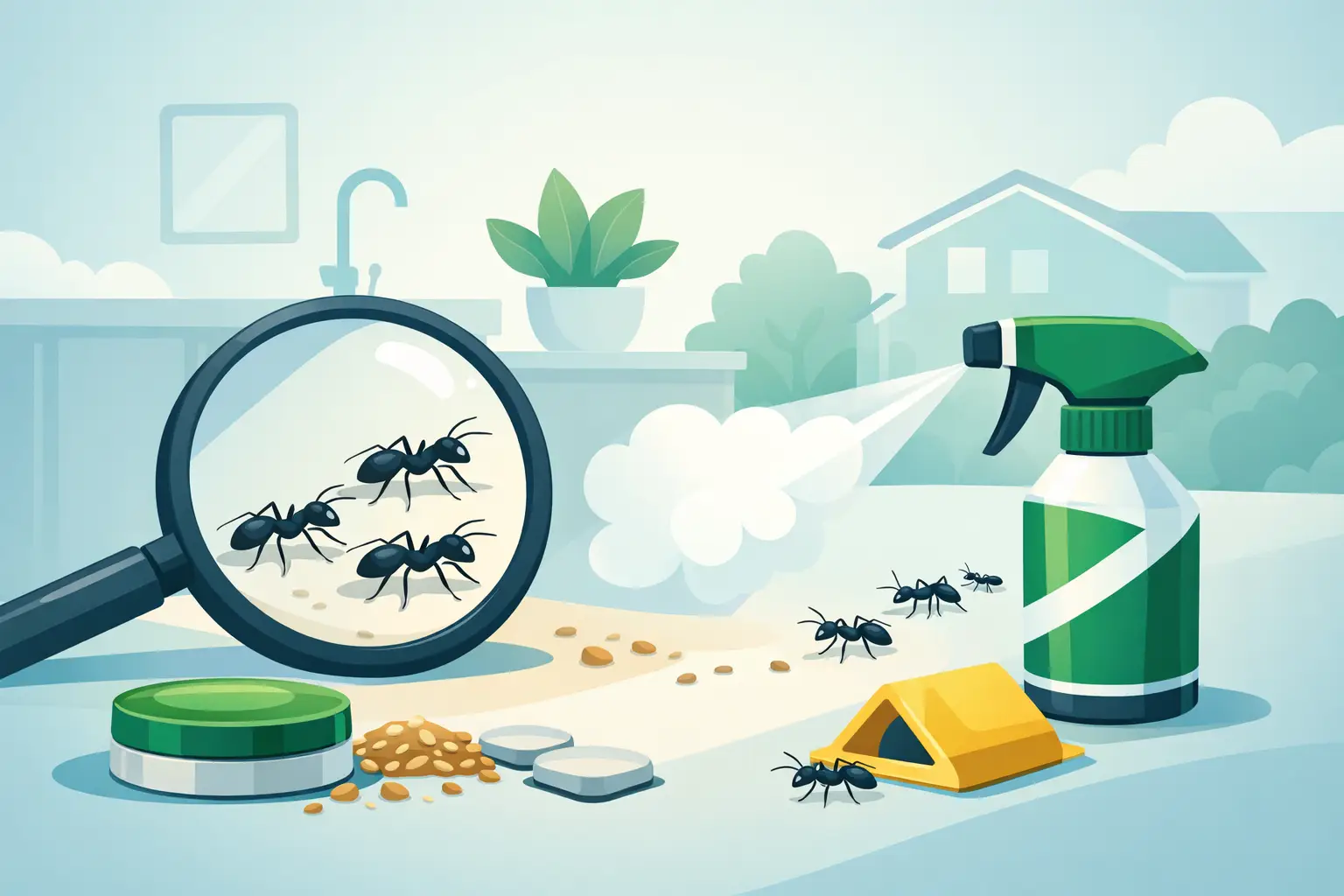
You usually notice ants right when you are carrying groceries in, packing lunches, or opening the shop for the day. One trail along the baseboard turns into a line at the sink, and suddenly you are searching for how to get rid of ants before the problem spreads. The good news is that ants are manageable. The less encouraging news is that a quick spray rarely fixes the real issue.
If you want lasting results, you need to stop the ants you see and deal with the colony behind them. In South King County, that often means looking beyond the kitchen counter. Moisture, food residue, foundation gaps, mulch beds, and even tree branches touching the structure can all help ants move in.
How to get rid of ants starts with the right ID
Not every ant problem behaves the same way. Small black ants in the pantry, moisture ants around damp wood, and larger carpenter ants near window frames all point to different conditions. That matters because the best treatment depends on what is attracting them and where they are nesting.
For many homes and businesses, the first sign is a steady trail near food or water. Worker ants leave scent trails that tell the rest of the colony where to go. If you wipe away a few ants but leave the trail and food source behind, more usually return. That is why surface sprays can feel effective for a day and disappointing by the weekend.
Carpenter ants deserve extra attention. They do not eat wood like termites, but they excavate it to build galleries. If you are seeing large black ants indoors, especially around damp areas, there may be a moisture issue that needs attention along with pest treatment.
Start with cleanup, but do not stop there
Good sanitation makes a real difference, but it is not a complete ant control plan. Think of cleanup as reducing the invitation. It lowers activity and helps other treatments work better.
Wipe counters, sweep crumbs, and clean up sticky spots under appliances. Store cereal, pet food, and snacks in sealed containers. Take out trash regularly and rinse recyclables before they sit indoors. If ants are showing up around sinks or bathrooms, dry standing water and fix minor leaks. Ants need moisture just as much as they need food.
Outside, a little prevention goes a long way. Keep branches and shrubs trimmed back from the house, and avoid stacking firewood directly against the exterior. If mulch is piled too high against the foundation, reduce it. These changes make it harder for ants to travel unnoticed and easier to spot where they are entering.
Follow the trail before you treat
One of the most practical things you can do is watch where the ants are coming from. That trail can lead you to a gap under a door, a crack near a window, plumbing penetrations under a sink, or activity along the foundation.
When you find entry points, seal what you reasonably can with caulk or weatherstripping. This step will not eliminate an established colony by itself, but it can reduce repeat traffic and support long-term prevention. It is especially helpful in homes that seem to get a fresh wave of ants every spring.
If the trail disappears into a wall void, behind cabinets, or under flooring, that is a sign the nest may be closer than you think. In those cases, killing visible ants is only part of the job.
Baits usually work better than sprays
This is where many DIY efforts go sideways. People see ants and reach for a contact spray. The spray kills the workers on the surface, which feels satisfying in the moment, but it can also prevent them from carrying treatment back to the nest.
For many common household ants, bait is the stronger approach. Worker ants feed on the bait and bring it back to the colony, helping target more than the visible trail. The trick is choosing the right bait type and giving it time to work. Some ants prefer sweets, while others are more attracted to protein or grease. If one bait is ignored, it does not always mean baiting failed. It may mean the bait does not match what that colony wants right now.
Placement matters too. Put bait near active trails, but not directly on top of where you have just used cleaning products or repellent sprays. Strong odors and residue can interfere with feeding. Once bait is down, resist the urge to disturb the area too much. You may see more ants at first, which can be alarming, but that often means the bait is doing its job.
When DIY ant control works and when it does not
A small, isolated trail caught early can often be improved with cleanup, exclusion, and properly placed bait. If the ants were drawn in by a temporary food source and the colony is outside, you may see activity drop off fairly quickly.
But some situations call for professional help sooner rather than later. If ants keep coming back after treatment, if you are seeing them in multiple rooms, or if the problem involves carpenter ants, it is smart to bring in an expert. The same goes for restaurants, break rooms, childcare settings, offices, and rental properties where recurring ant activity can affect health, comfort, or reputation.
It also depends on the structure. Older homes often have more entry points. Properties with heavy moisture, crawlspace issues, or dense landscaping may need a broader treatment plan. In those cases, the question is not just how to get rid of ants now. It is how to keep them from becoming a seasonal routine.
What professional ant treatment should include
A dependable ant service should do more than spray the perimeter and leave. Lasting ant control usually starts with inspection. That means identifying the ant species when possible, locating high-activity areas, checking likely entry points, and looking for conditions that support nesting.
From there, treatment may include targeted baiting, exterior applications, nest treatment, and recommendations for exclusion or moisture correction. For some properties, ongoing service makes the most sense because ant pressure changes with the season. Warm weather, rainfall, irrigation, and nearby vegetation can all shift where colonies forage.
This is where local experience matters. What works on one property in Bellevue may need adjustment in Kent, Auburn, or Maple Valley depending on lot layout, surrounding trees, moisture levels, and construction type. A family-owned local company that understands the area can usually spot patterns faster and recommend practical next steps.
If you are hiring help, look for a provider that is licensed and insured, uses EPA-approved products, and offers follow-up support. Ant issues are not always solved in one visit, especially when multiple colonies are active. That is why unlimited free follow-ups can make a real difference for homeowners and property managers who want confidence the issue will actually be handled.
How to keep ants from coming back
Prevention is where you save yourself future frustration. Once the current activity is under control, keep food sealed, clean up pet bowls, and stay on top of leaks and moisture. Check weatherstripping, door sweeps, and foundation gaps at least seasonally.
Outside, keep mulch and vegetation from creating hidden bridges to the structure. If you have recurring ant activity near patios, utility lines, or landscape borders, pay attention to those zones before the next warm stretch. Consistency matters more than perfection.
For businesses, prevention also means training staff on quick cleanup and trash handling. A few crumbs in a break room or sugary spills near a service counter can support a surprising amount of activity. The faster those attractants are removed, the less likely ants are to establish a reliable route indoors.
Plateau Pest helps homeowners and businesses across South King County handle ant problems with fast response times, practical treatment plans, and unlimited free follow-ups when needed. Whether you are dealing with a sudden kitchen trail or a recurring issue around the property, the right fix is the one that treats the source, not just the symptoms.
If ants keep showing up, do not assume you have to live with them until the season changes. A quick response now is usually easier, less expensive, and a lot less stressful than waiting for a small trail to turn into a bigger problem.