
A wasp nest usually gets noticed at the worst possible moment – when you are unlocking the front door, mowing near the fence, or watching kids play too close to the eaves. If you are searching for how to remove wasp nests, the first thing to know is simple: some nests are manageable, and some are flat-out too risky to handle yourself.
That distinction matters. Wasps can become aggressive fast, especially when a nest is disturbed or hidden in a wall, attic, shrub, or roofline. For homeowners and property managers in South King County, the goal is not just getting rid of the nest. It is doing it without turning a wasp problem into a medical emergency.
How to remove wasp nests without making it worse
The safest approach depends on the type of nest, where it is located, and how active the colony is. A small, early-stage nest under an eave is very different from a mature nest tucked inside siding or behind a commercial sign.
If the nest is high off the ground, close to a doorway, attached near a play area, or hidden inside a structure, DIY removal is usually not worth the risk. The same goes for anyone with a known allergy to stings, limited mobility, or no protective equipment. In those cases, the smart move is to leave the area alone and call a licensed wasp removal professional.
If the nest is clearly visible, small, easy to reach, and in an open area, there are situations where removal can be done carefully. Timing matters. Wasps are typically less active in the evening or early morning when temperatures are cooler, but less active does not mean harmless.
Before doing anything, keep children and pets well away from the area. Do not swat at the nest, spray it with a garden hose, knock it down with a broom, or burn it. Those methods cause immediate agitation and usually end with multiple stings.
Know when a wasp nest is too dangerous
A lot of online advice makes nest removal sound routine. It is not always routine. There are a few red flags that should push the job out of DIY territory right away.
A large nest with heavy flight activity is one. If you see a steady stream of wasps entering and leaving, the colony is established and defensive. A nest hidden in a wall void or attic is another. You may only see the entry point, not the full size of the nest, which means disturbing it can drive wasps deeper into the structure or into living spaces.
Ground nests also deserve caution. Some wasps nest in soil, and people often discover them by accident while gardening or mowing. Those encounters can trigger a fast swarm response because the nest entrance is at foot level and gets disturbed without warning.
Commercial properties have their own risks. If wasps are nesting near loading doors, outdoor seating, dumpster areas, playgrounds, or customer entrances, quick professional treatment protects both people and your liability.
Signs you should call a pro immediately
There are a few situations where waiting is a bad idea: repeated wasp activity around the same spot, a nest inside the building envelope, multiple nests on the property, or any sting incident involving a child, older adult, or allergic person. Fast response matters more than saving a little money on a can of spray.
Basic steps for small, exposed nests
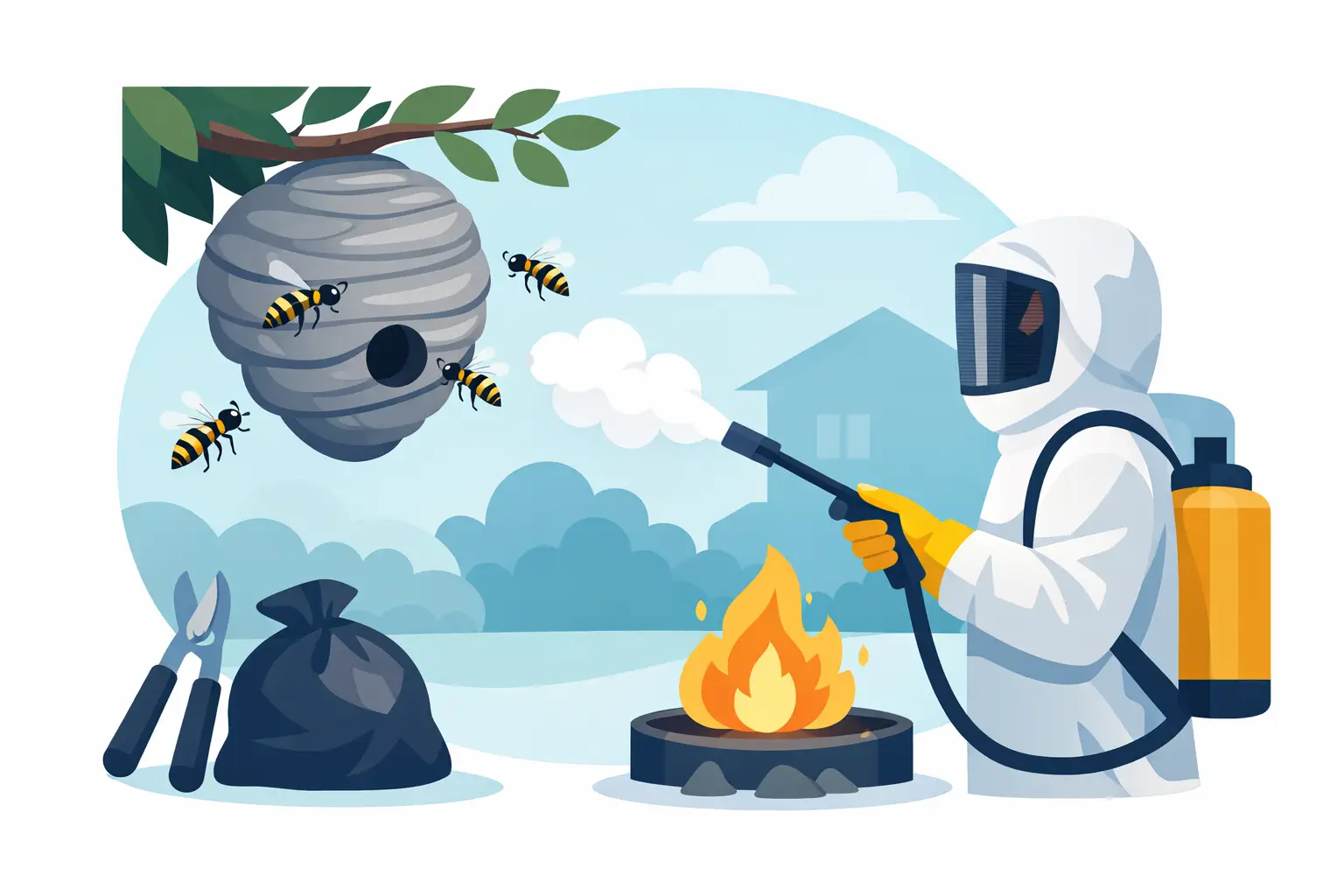
If you have a small nest in an open, low-risk location and decide to handle it yourself, caution is the rule. Wear thick clothing that covers arms and legs, closed-toe shoes, gloves, and eye protection. Leave no skin exposed if you can help it.
Use a wasp-specific aerosol labeled for nest treatment, and read the product instructions before you go near the nest. Stand as far back as the spray allows. Treat the nest during low-activity hours, and make sure you have a clear path to move away quickly.
After treatment, do not rush in to remove the nest. Give it time based on the label directions. Wasps may still be alive or may return for a short period. Once there is no visible activity, the nest can usually be knocked down carefully and sealed in a bag for disposal.
Even then, keep expectations realistic. Removing the paper nest does not always solve the larger issue if the property has attractive nesting spots nearby. If wasps rebuild in the same area, there is usually a reason.
Why wasps keep coming back
Homeowners often focus on the nest they can see, but recurring wasp problems are often about the site, not just the structure. Eaves, soffits, porch ceilings, sheds, deck framing, and wall voids all offer quiet shelter. Food residue from outdoor dining, open trash, sugary drink spills, and even pet food can also draw wasps into the area.
In spring and early summer, nests start small and can be easier to address. By late summer, colonies are larger, more active, and more defensive. That is why the same nest that seemed minor in June can become a serious problem by August.
For homes and businesses around Kent, Covington, Maple Valley, Auburn, Renton, Bellevue, and South Seattle, seasonal activity can vary with weather and property layout. A shaded backyard with dense landscaping may have a different pattern than a sunny retail lot or apartment breezeway. That is where local experience helps.
How to remove wasp nests and reduce future nesting
Getting rid of one nest is only part of the job. Prevention lowers the chance of the next one showing up in the same place.
Start by checking common nesting areas around the property every few weeks during wasp season. Look under eaves, around window frames, inside sheds, beneath decks, and around roof edges. Early detection is easier and safer than dealing with a mature colony.
Keep trash lids tight and clean up outdoor food and drink residue quickly. If your property has fruit trees, collect fallen fruit before it starts drawing insects. Seal gaps around siding, vents, utility penetrations, and roofline openings where wasps might enter hidden spaces.
Landscape maintenance helps too. Overgrown shrubs near entryways or foundation walls can create quiet, protected nesting zones. Trimming vegetation back improves visibility and reduces cover.
Prevention is where professional service pays off
A one-time removal solves the urgent issue, but recurring service can be a better fit if your property sees repeat activity every year. A professional can identify likely nesting zones, treat problem areas appropriately, and return if activity shows up again. That is especially useful for families with kids, property managers with multiple units, and businesses that cannot afford wasps around customers or staff.
DIY vs professional wasp removal
There is a reason many people start with do-it-yourself treatment. It feels faster, cheaper, and straightforward. Sometimes, for a small visible nest, it can be.
But DIY has trade-offs. Store-bought sprays do not fix hidden nests, do not always reach difficult rooflines, and do not give you any backup if the problem returns next week. They also put you in the sting zone. If the nest is active and you miss your shot, wasps respond fast.
Professional removal costs more upfront, but it often saves time, stress, and repeat treatments. You also get a proper assessment of where the nest is, how serious the activity is, and whether there may be more than one colony on the property. For many South King County homeowners, that peace of mind is worth it.
Plateau Pest works with local homeowners and businesses that need fast wasp removal, practical prevention, and follow-up support when pests come back. That kind of responsive service matters when the nest is above your front door and waiting a week is not realistic.
What to do right now if you found a nest
If you just discovered a wasp nest, the best immediate move is not dramatic. Back away slowly, keep others clear of the area, and avoid vibrations or loud activity nearby. Then assess the situation honestly.
If the nest is small, exposed, and low risk, careful treatment may be possible. If it is large, hidden, hard to reach, or near people, skip the experiment and get professional help. Fast action is good. Safe action is better.
A wasp problem can go from annoying to dangerous quickly, especially in busy homes and active commercial spaces. The right response is the one that protects your family, your tenants, your customers, and your own peace of mind.