
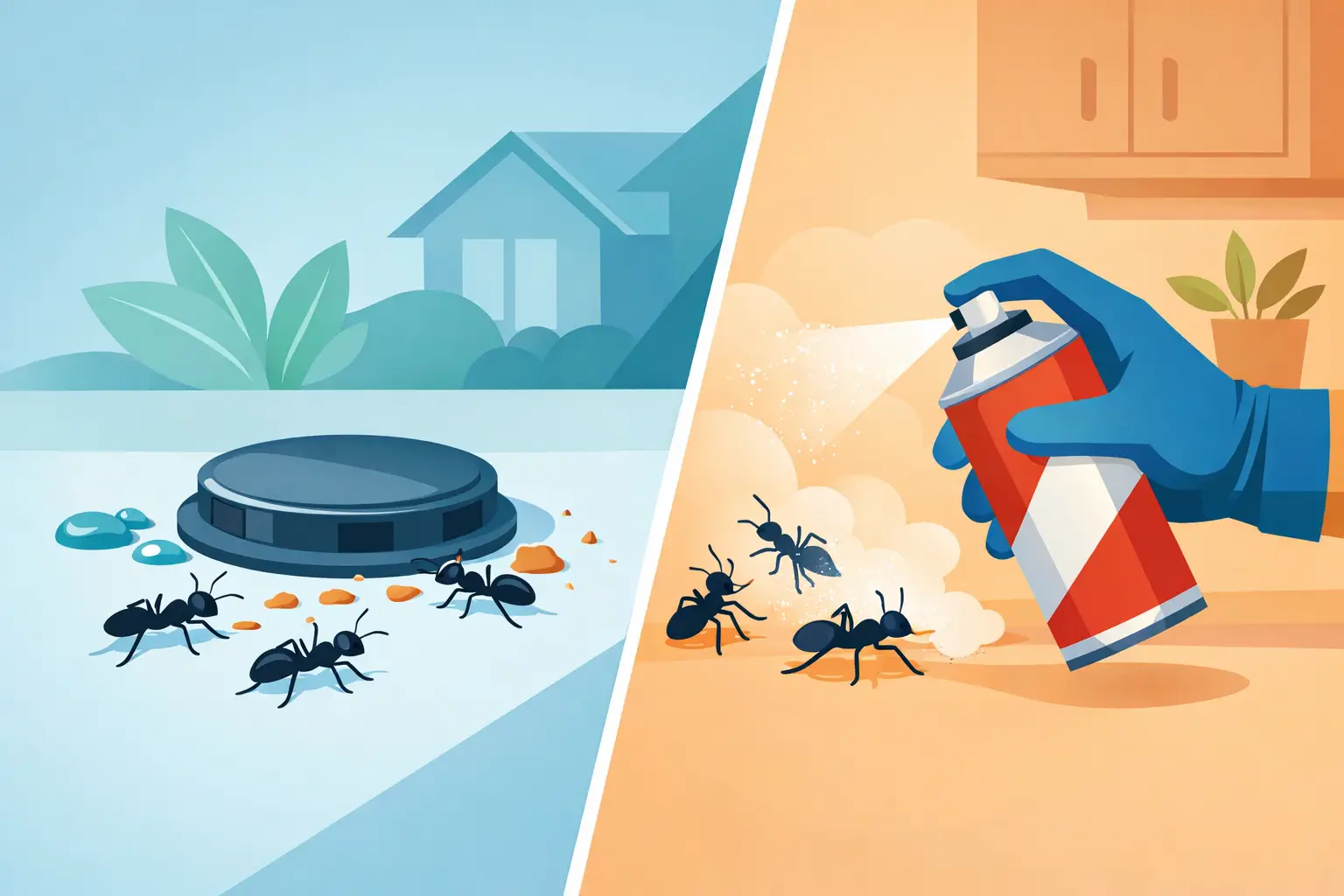
A line of ants along the kitchen counter can make a clean home feel suddenly out of control. The key question in ant bait versus spray treatment is not simply which product kills ants fastest. It is which method reaches the source of the problem – and keeps new trails from appearing a few days later.
For many homes and businesses in Kent, Covington, Maple Valley, Auburn, Renton, Bellevue, and South Seattle, the right answer depends on where ants are traveling, what species is involved, and whether the colony is nesting inside or outside the structure. Sprays can deliver quick relief. Baits can eliminate the colony over time. A professional treatment often uses both in the right places, along with the prevention work that makes lasting control possible.
Ant Bait Versus Spray Treatment: The Main Difference
Ant spray is a contact treatment. When an ant is directly hit or crosses a treated surface, it may die quickly. That can be helpful when ants are actively moving through a doorway, around a sink, or across a break-room counter. The immediate reduction in activity can provide real peace of mind.
Ant bait works differently. It is designed to attract foraging ants, which carry the bait back to the nest and share it with other ants. Because the active ingredient is generally slower acting, workers have time to transfer it through the colony. That delay is the reason bait is often the better choice when the goal is to address the nest rather than just the ants currently in view.
Neither option is automatically right for every infestation. The best approach depends on the ant behavior you are seeing and the conditions around your property.
When Ant Bait Is the Better Choice
Bait is usually the stronger long-term option when ants have established a consistent trail indoors or are repeatedly entering from outdoors. Seeing only a few ants does not always mean there is a small problem. Those ants are scouts and workers collecting food for a colony that may be hidden in soil, wall voids, beneath a patio, or near landscaping.
A bait treatment is especially useful when the nest location is unknown. Rather than trying to find and spray every possible entry point, the workers help carry the treatment back to the colony. This makes bait a practical solution for many common nuisance ant problems in South King County homes.
Patience matters with bait. You may see more ant activity shortly after placement because the bait is attracting workers. That can be alarming, but it is often a sign that ants are feeding and taking the product back to the nest. Depending on the species and colony size, noticeable improvement may take several days or longer.
Baits also need the right conditions to work. Ants change their food preferences based on the season, weather, and what the colony needs. Some periods call for sweet bait; others call for protein or grease-based bait. If a bait is ignored, it does not necessarily mean the approach failed. It may mean the bait type, placement, or timing needs to change.
When Spray Treatment Makes Sense
Spray treatment has an important role when immediate control is needed. If ants are entering in large numbers through a visible gap, gathering around pet food, or disrupting customers in a commercial space, a targeted spray can quickly reduce the active trail.
A residual perimeter treatment can also help create a barrier around common entry areas, such as foundation edges, utility penetrations, door thresholds, and window frames. This is useful when outdoor ants are regularly finding their way inside.
The limitation is that spray treatment may not reach the colony. Spraying the ants you see can break up a trail temporarily, but workers may return from the nest by using a different route. In some cases, heavily spraying around active bait stations can interfere with bait acceptance, since it may kill workers before they carry bait back.
Sprays should be targeted and applied according to label directions. Over-the-counter products are often overused in kitchens, pantries, and other living spaces, which can create unnecessary exposure without solving the source of the infestation. For households with children, pets, or sensitive environments, thoughtful placement and EPA-approved products matter.
Why a Combined Approach Often Works Best
For recurring ant activity, bait and spray are not always competing options. They can be part of the same plan. A technician may use bait where workers are foraging and apply a targeted exterior treatment to reduce new ants entering from outside. The goal is to avoid treating every surface and instead focus on the places that matter most.
Professional ant control also looks beyond the product. Moisture near foundations, overgrown vegetation touching the home, gaps around pipes, loose weatherstripping, and food sources can all support an ongoing ant problem. If those conditions remain, ants may return even after a successful treatment.
At Plateau Pest, ant service is built around identifying the activity pattern, treating the appropriate areas, and providing follow-up support when needed. That matters because ant behavior can shift after an initial visit. A trail may move, bait preferences may change, or a separate colony may become active nearby.
What to Do Before and After Treatment
A few simple steps can make professional or DIY ant treatment more effective. First, avoid spraying over bait stations or directly on ants feeding at bait. Let the workers carry bait back to the colony unless your technician tells you otherwise.
Next, clean food residue from counters, floors, and cabinet shelves. Store pantry items in sealed containers, wipe up drink spills promptly, and do not leave pet food out overnight when possible. These steps do not replace treatment, but they reduce competing food sources that can make bait less attractive.
Outside, keep mulch and vegetation from pressing directly against siding. Repair dripping outdoor faucets, improve drainage where water collects near the foundation, and seal accessible cracks around doors, windows, utility lines, and pipe openings. Ants are small enough to use gaps that are easy to overlook.
For businesses, pay special attention to employee break rooms, food-storage areas, dumpsters, and receiving doors. A quick response protects both the customer experience and the day-to-day operation of the business.
Signs You May Need Professional Ant Control
A single scout ant may not require a service call. Repeated trails, however, deserve attention. You may need professional help if ants return after repeated store-bought treatments, appear in multiple rooms, emerge from wall gaps or electrical outlets, or become active around moisture-damaged wood.
Large black carpenter ants deserve particular attention. They do not eat wood, but they can excavate damp or damaged wood for nesting. Their presence may point to a moisture issue that should be inspected and repaired.
Professional service can also be worthwhile when you are unsure what kind of ants you have. Different species respond differently to bait, residual products, and exclusion work. Correct identification saves time and prevents the cycle of treating a visible trail without resolving the colony behind it.
Choose Relief Now and Control That Lasts
If you need ants gone from a visible area quickly, a carefully targeted spray can help. If you want to reach the colony that keeps sending workers into your home or business, bait is often the more effective long-term tool. The strongest results usually come from matching the treatment to the infestation, then following through with sanitation, exclusion, and monitoring.
When ant activity keeps coming back, do not settle for another temporary break in the trail. A local pest professional can help identify why ants are choosing your property and build a treatment plan that protects it over time.