
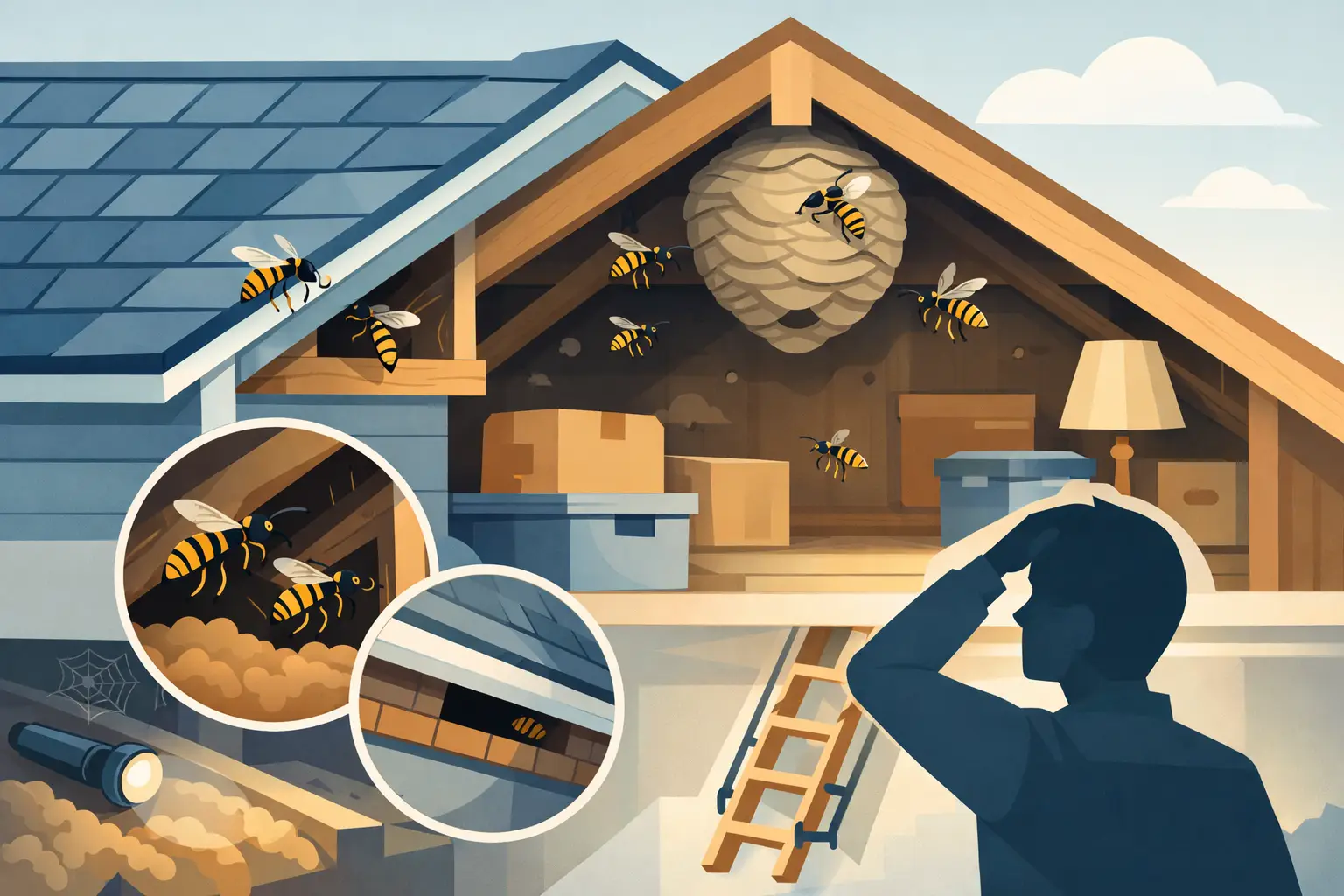
Hearing a steady buzz above the ceiling is unsettling, especially when you are not sure whether it is one stray insect or a growing nest. If you are asking, why are wasps entering my attic, the short answer is that your roofline may offer the shelter, access, and nesting conditions they are looking for. In Kent, Renton, Maple Valley, and nearby South King County communities, wasp activity often picks up as weather warms and colonies expand.
An attic is not usually the wasps’ destination in the way a kitchen is for ants. They are often using a small exterior gap to reach a protected void near the attic, eaves, soffits, or walls. The problem can grow quickly once a queen or established colony decides the spot is safe.
Why Are Wasps Entering My Attic in the First Place?
Wasps prefer protected, dry locations that stay relatively undisturbed. Your attic and the spaces around it can provide exactly that. Loose vents, gaps around utility lines, damaged soffits, open fascia boards, cracked siding near the roof, and worn weatherstripping can all become entry points.
Paper wasps commonly build open, umbrella-shaped nests under eaves or inside protected roofline areas. Yellowjackets may use enclosed wall voids, attic cavities, or gaps beneath roofing materials. Hornets can build larger enclosed paper nests in sheltered areas, though each species’ habits vary. From the ground, it is not always possible to identify the species or locate the nest safely.
Attics also offer a relatively stable environment. They are warmer than the outdoors during cool periods, protected from rain and wind, and far less likely to be disturbed than a tree branch or exposed porch corner. A small gap that seems insignificant to a homeowner can be more than large enough for a wasp to use.
A queen may have found the space first
In spring, a fertilized queen searches for a sheltered place to begin a new nest. Early on, you may see only one or two wasps coming and going. That can look harmless, but a nest can develop through the season as workers take over foraging and construction.
By mid-to-late summer, consistent traffic at one roof edge, vent, or crack often means there is an active colony nearby. The more activity you see, the more important it is to keep your distance and avoid disturbing the area.
Your home may have a roofline opening
Wasps do not need a large hole. A gap along a soffit, an unsealed attic vent, a lifted shingle edge, or a separation where siding meets trim can be enough. Older homes, homes with recent roof work, and properties with moisture damage sometimes have openings that are easy to miss from the ground.
This does not mean your home is poorly maintained. Seasonal weather, wind, settling, and normal wear can create small gaps over time. The priority is finding the active entry point and addressing it at the right time.
Signs There May Be a Wasp Nest in the Attic or Wall
The clearest sign is repeated wasp traffic. Watch from a safe distance for several minutes. If wasps regularly disappear into the same point near the roofline and reappear, there may be a nest behind the exterior surface or in an attic-adjacent void.
You may also hear faint scratching, tapping, or buzzing through a ceiling or wall. Noise alone is not proof of a wasp nest because rodents and birds can create similar sounds. However, noise paired with visible wasp activity outside is a strong reason to arrange an inspection.
Inside, you might notice wasps appearing near an attic hatch, upstairs window, light fixture, or vent. A few insects indoors can happen when a colony is using a wall or ceiling void and finds a secondary path into living space. Do not assume they are simply lost, especially if it happens more than once.
Other warning signs include small papery material near an exterior opening, a concentrated number of wasps around an attic vent, or a sudden increase in activity on warm afternoons. Wasps are usually most active during daylight, so a quiet roofline at night does not necessarily mean the nest is gone.
What Not to Do When Wasps Are Using Your Attic
It is tempting to seal the hole as soon as you spot it. With an active nest, that can create a bigger problem. Blocking the main entrance may trap wasps inside the structure, leading them to search for another route – sometimes through gaps into your home.
Avoid spraying an unknown opening from a ladder, poking at a soffit, or entering a tight attic space to search for the nest. Wasps can swarm when they feel their nest is threatened, and stings are more likely when you are close to an enclosed colony with limited room to move away.
Do not rely on a single store-bought spray for a nest hidden behind walls, insulation, or roofing. Surface sprays may kill some visible workers without reaching the colony. They can also agitate remaining wasps and make the nest harder to handle.
If anyone in the household has a known sting allergy, keep people and pets away from the area and treat active wasp traffic as urgent. Call 911 immediately for trouble breathing, swelling of the throat or face, dizziness, widespread hives, or other signs of a severe allergic reaction after a sting.
The Safe Way to Handle Attic Wasp Activity
Professional removal begins with locating where wasps are entering and determining whether the nest is in an accessible spot, a wall void, a soffit, or the attic itself. That distinction matters. The best treatment method depends on the wasp species, the nest location, colony size, and whether there are indoor activity concerns.
A trained technician can treat the active colony while minimizing risk to your family, pets, and property. After activity has stopped, the entry point can be sealed or repaired to reduce the chance of future nesting. Timing matters: exclusion work should generally happen after the colony has been addressed, not before.
For homes in South King County, it also helps to look beyond the immediate nest. Wasps may return to favorable roofline areas in future seasons if vents remain damaged or trim gaps stay open. A practical plan combines removal with targeted prevention.
Preventing wasps from returning
Once there is no active colony, inspect the exterior roofline and address gaps around soffits, fascia, vents, and pipe penetrations. Repair damaged screens on attic vents, secure loose trim, and keep tree branches from rubbing against the roof where practical.
Outdoor food and garbage can attract foraging wasps, although they are not usually the reason a colony chose your attic. Keep trash lids closed, rinse sticky recycling, clean up fallen fruit, and avoid leaving pet food outdoors. These steps can reduce wasp traffic around the home, especially later in summer when colonies are actively seeking food.
It is also wise to check eaves, sheds, decks, and attic vents in early spring. Catching a small nest before the colony grows is typically simpler and less disruptive than dealing with heavy summer activity.
When to Call for Wasp Removal
Call for help when you see repeated entry and exit from one roofline location, hear buzzing in a ceiling or wall, find wasps indoors, or cannot safely see where the insects are going. You should also call if the nest is near a bedroom, entrance, play area, business doorway, or anywhere people are likely to pass close by.
Plateau Pest provides fast, professional wasp removal for homeowners and businesses across South King County, with practical treatment options and follow-up support. A trained inspection can confirm what is happening around your attic, address the active issue safely, and help you plan the right exclusion repairs afterward.
A wasp nest near an attic rarely improves by waiting. Keeping clear of the entry point and getting the right help early can protect your home from an uncomfortable surprise overhead.