
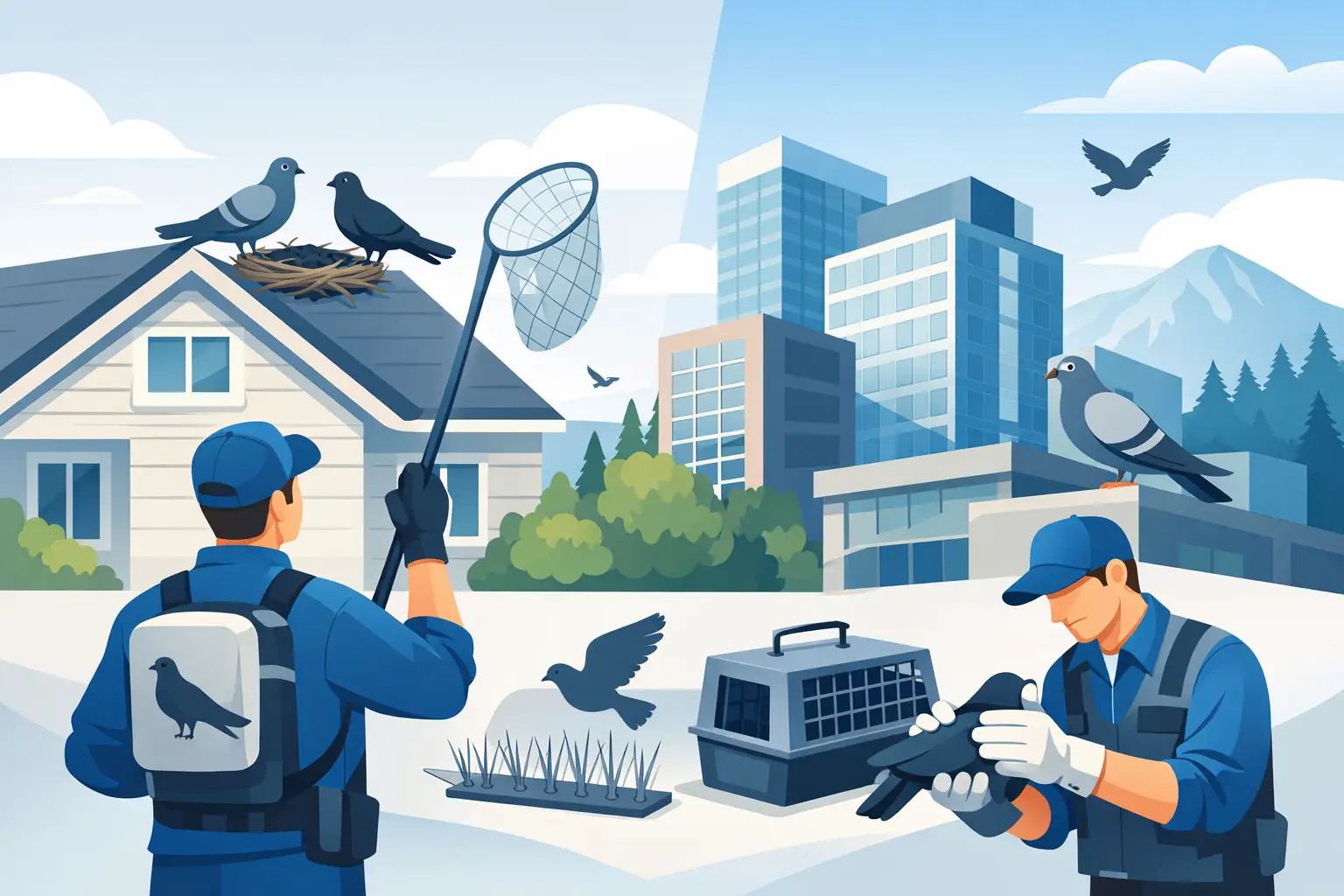
A bird on the fence can be part of a Bellevue morning. A flock roosting under your solar panels, in a warehouse loading area, or above your front entry is a different matter. The best Bellevue bird removal starts by identifying what the birds are doing, where they are getting in, and whether a nest is active before anyone tries to move them.
Bird problems can become property problems quickly. Droppings stain siding and walkways, clog gutters, create slippery surfaces, and can damage equipment. Nesting materials can block vents or drainage paths. For businesses, birds around entrances, patios, signs, and loading docks can also create an unpleasant experience for customers and employees.
What Best Bellevue Bird Removal Should Include
Effective bird control is not simply about getting birds to leave for a day. A dependable service should focus on humane removal or deterrence, legal compliance, cleanup guidance when needed, and exclusion that makes the problem less likely to return.
That matters because Bellevue bird issues are often tied to a specific structure. Pigeons may use rooflines and covered parking areas as reliable roosts. Starlings and sparrows may enter gaps around vents, eaves, or utility openings. Birds can also settle beneath solar arrays where they are protected from rain and predators. If the access point remains open, the same site can attract birds again as soon as the pressure is gone.
A professional inspection should look at the species involved, the number of birds, nesting activity, food and water sources, entry points, and the areas most affected by droppings. The right solution depends on those details. A small sparrow issue at a vent calls for a different approach than a persistent pigeon roost over a commercial doorway.
Safe and legal timing matters
Many birds are protected under federal, state, or local rules, particularly when nests contain eggs or young birds. That is one reason do-it-yourself nest removal can create bigger problems. A technician should assess whether the nest is active and use a plan that respects applicable wildlife protections.
In some cases, the best move is to wait until young birds have left the nest, then clean the area and install exclusion measures right away. In others, humane deterrents can redirect birds before nesting begins. Fast help is still possible, but responsible bird control does not mean taking shortcuts.
Common Signs You Need Bird Control
You may see the birds every day, but the damage often reveals how established the issue has become. Repeated droppings in the same location, feathers collecting near a roof edge, chirping from a vent, and nesting material in gutters are common warning signs.
Homeowners should also watch for birds gathering beneath solar panels or returning to the same porch, attic vent, chimney opening, or roof overhang. A few birds can turn into a regular roost when they find shelter and an easy path in.
For commercial properties, problem areas often include awnings, signage, roof access points, HVAC equipment, dumpster areas, covered walkways, and loading docks. Property managers should take repeat droppings seriously. Besides affecting appearance, buildup can increase cleanup needs and create slip hazards in high-traffic areas.
If you hear fluttering or scratching inside a wall, soffit, or vent, do not seal the opening immediately. Birds or young may still be inside. A proper evaluation helps prevent trapping wildlife in the structure and avoids odors or secondary pest issues later.
Why Exclusion Is the Long-Term Fix
Removal without exclusion usually provides only temporary relief. Birds are creatures of habit. If a sheltered ledge, attic opening, or solar-panel gap worked once, they are likely to return to it.
Exclusion means closing or protecting access points with appropriate materials and methods. Depending on the location, that may involve screening vents, securing openings near rooflines, adding bird barriers beneath solar panels, or using physical deterrents on suitable ledges and structures. The goal is not to make your property unsafe or unsightly. It is to remove the conditions that allow birds to settle in.
The best approach also accounts for the building itself. Historic-looking homes, newer construction, multi-unit properties, restaurants, offices, and warehouses each have different access points and appearance concerns. An exclusion plan should be practical for the property, not a one-size-fits-all treatment.
Cleanup should be handled with care
Bird droppings and nesting debris are not something to sweep up dry or blast around with a leaf blower. Dry debris can become airborne, and concentrated waste can be difficult to remove from porous surfaces, equipment, and roof areas.
For small, accessible messes, use gloves, dampen the material first, and clean carefully according to product directions. Avoid pushing debris into gutters, drains, or ventilation areas. When the buildup is extensive, hard to reach, or located around commercial operations, professional guidance is the safer choice.
Cleaning alone is not bird control, though. If the birds still have access to the area, the mess will return. Pair cleanup with the right deterrent or exclusion work for a result that lasts.
What Not to Do With a Bird Problem
A few common responses can make an existing issue worse. Do not use poison, glue products, or unapproved methods. These approaches can harm non-target wildlife, pets, and the surrounding environment, while leaving you with a difficult cleanup problem.
Avoid blocking a hole when you have not confirmed whether birds are inside. Do not disturb an active nest without professional advice. Scare devices may help in limited situations, but birds can quickly get used to visual or sound-based deterrents if there is no physical barrier behind them.
Feeding birds near the problem area can also keep the cycle going. Secure outdoor trash, clean up fallen seed from bird feeders, and avoid leaving pet food outside. These small changes will not solve a nesting problem on their own, but they remove easy reasons for birds to stay nearby.
Choosing a Bellevue Bird Removal Company
When comparing bird control providers, look beyond a promise to remove the birds. Ask how the company identifies the species, handles active nests, addresses entry points, and supports you if activity returns. Clear answers are a sign that the service is based on prevention, not just a quick visit.
It also helps to choose a local, licensed, and insured company that understands the building styles and seasonal wildlife activity around Bellevue. You want a provider that can respond quickly when birds are affecting a home, tenant space, storefront, or workplace, while still using safe methods around children, pets, customers, and staff.
Plateau Pest provides practical bird control options for homes and businesses, with a focus on safe treatment, exclusion, and responsive service. As a family-owned local pest control company, the team can help identify the source of the problem and recommend a clear path forward without pushing unnecessary work.
Questions worth asking before service
Before booking, ask whether the estimate includes an inspection, what type of exclusion is recommended, and whether cleanup or repairs are needed separately. You should also ask what happens if birds return after the initial work. Follow-up support matters because weather, building changes, and overlooked access points can affect results.
Price will vary based on the bird species, building height, accessibility, nesting status, cleanup needs, and the amount of exclusion required. A low price may sound appealing, but it can cost more if the work only scares birds away and leaves the original entry point open.
Protect Your Property Before the Problem Grows
Bird activity rarely improves when a roost or nesting site has been left alone for months. Early action can protect gutters, vents, roofs, solar panels, walkways, and your peace of mind. If you are seeing repeat droppings, hearing birds in a structure, or noticing nests where they do not belong, arrange a professional inspection before the next nesting cycle makes the issue harder to solve.
A good bird control plan should leave your property cleaner, safer, and less inviting to unwanted birds, while treating wildlife responsibly. That is the standard Bellevue homeowners and businesses should expect.