
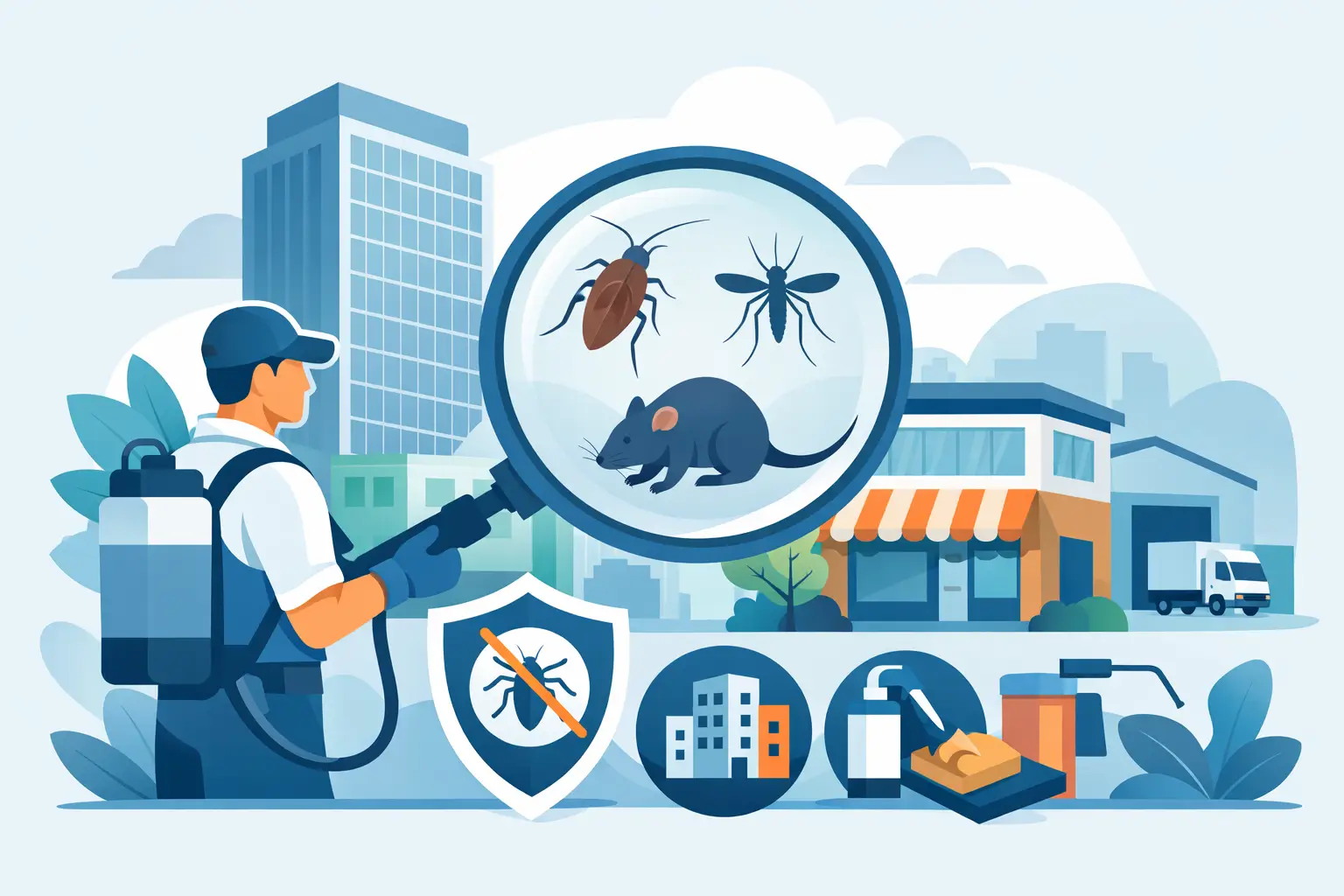
A single mouse sighting in a break room, ant trail near a register, or fly problem around a dumpster can become much more than a maintenance issue. It can affect employee comfort, customer confidence, health standards, and your business reputation. This commercial pest management guide gives South King County business owners and property managers a practical way to respond quickly and prevent recurring pest activity.
Commercial pest control is not one-size-fits-all. A restaurant, office, warehouse, retail shop, apartment community, and medical practice all face different risks. The right plan starts with finding the source of the problem, treating it safely, and putting reliable prevention in place without getting in the way of daily operations.
Start With a Fast, Professional Inspection
Pests rarely appear without a reason. Rodents look for warmth, food, and entry points. Ants follow moisture and food residue. Cockroaches settle near water sources, clutter, and hidden cracks. Flies often point to sanitation or waste-handling issues. An inspection identifies what is active, where pests are entering, and the conditions helping them stay.
For a commercial property, the inspection should cover more than the spot where someone saw a pest. A technician should look at exterior doors, utility penetrations, loading areas, rooflines, drains, food storage, employee break rooms, mechanical spaces, and dumpster locations. In multi-tenant properties, shared walls and common areas also matter.
Speed matters when pest activity threatens customer-facing areas or compliance requirements. But quick treatment should not mean guessing. A good service plan addresses the pest you have and the reason it showed up in the first place.
Match the Treatment to Your Business and Pest Problem
The best commercial pest management guide is one that recognizes trade-offs. A one-time treatment may be appropriate after a localized wasp nest or occasional spider issue. Ongoing service is usually the better value when a property has recurring ants, rodents, cockroaches, mosquitoes, or other persistent pests.
Treatment methods should fit the environment. In a food-service business, careful placement and sanitation recommendations are essential. In an office, discreet service may be a priority. In a warehouse, exclusion work and rodent monitoring can be more important than broad treatments. For apartments or commercial buildings with several occupants, communication and coordinated access may determine whether the issue is resolved quickly.
At Plateau Pest, commercial service is built around practical treatment, EPA-approved products, and follow-up support that helps businesses stay protected over time. The goal is to use the right approach for the property, not more product than the situation requires.
Common Commercial Pest Concerns
Rodents are a major concern because they can damage wiring, contaminate storage areas, and reproduce quickly. Effective rodent control combines trapping or removal with exclusion work, such as sealing gaps around pipes, doors, vents, and foundation openings.
Cockroaches require a detailed response. Seeing one during the day can signal a larger hidden population, especially in kitchens, break rooms, or areas with plumbing. Treatment may include targeted applications, monitoring, and recommendations for cleaning and reducing harborages.
Ants are common throughout Kent, Renton, Auburn, Covington, Maple Valley, Bellevue, and surrounding communities. Surface spraying alone may not solve an established colony. Identifying the ant type, trails, and likely nesting areas helps determine the most effective treatment.
Wasps and bees can create an immediate safety concern near entrances, patios, loading docks, and outdoor seating. A professional should assess the nest location and species before removal, particularly when pollinators may be present.
Flies, spiders, mosquitoes, birds, and occasional invaders can also affect a business, but each calls for a different plan. The key is accurate identification rather than treating every pest with the same method.
Focus on Prevention Between Service Visits
Professional treatment works best when paired with consistent property maintenance. Your staff does not need to become pest control experts, but a few simple routines can significantly reduce conditions that attract pests.
Keep food in sealed containers, remove trash on schedule, and clean spills promptly. Pay close attention to break rooms, vending areas, employee lockers, and behind appliances. Exterior areas need the same care: keep dumpster lids closed, manage standing water, and avoid storing cardboard, pallets, or unused materials directly against the building.
Moisture control is especially important in the Pacific Northwest. Repair leaking faucets and pipes, clear blocked drains, and report water stains or damp areas early. Small leaks can create ideal conditions for cockroaches, ants, and other pests that need a dependable water source.
Exclusion is one of the most valuable long-term steps. Weather stripping, door sweeps, screens, sealed utility openings, and repaired gaps can stop pests before they enter. This is often a better investment than repeatedly treating the same problem indoors.
Give Employees a Clear Reporting Process
Employees are usually the first people to notice pest activity. Make reporting easy and specific. Ask staff to note the pest, location, date, time, and any visible conditions, such as an overflowing trash bin or water leak. A quick phone photo can also help with identification.
Avoid asking employees to use over-the-counter sprays at work. These products can interfere with professional treatment, spread some insects into new areas, or create unnecessary exposure in shared spaces. A documented report and prompt professional response are more effective.
Choose a Service Schedule That Fits Your Risk
The right service frequency depends on your industry, building condition, season, and pest history. A low-traffic office with no recurring issues may need less frequent preventive visits than a restaurant, grocery-related business, apartment property, or warehouse near open fields.
For many businesses, recurring service provides the strongest protection because it catches early activity before it becomes visible to customers or employees. Regular visits also give your pest professional a chance to inspect new vulnerabilities, refresh monitoring where needed, and track patterns across seasons.
Spring and summer can increase ant, wasp, mosquito, and fly activity. Fall often drives rodents indoors as temperatures drop. In practice, year-round protection is usually more predictable and less disruptive than waiting for an urgent problem. Still, a flexible plan matters. If you have a sudden rodent sighting or wasp nest near an entrance, you should be able to get help quickly rather than wait for the next scheduled visit.
Protect Customers Without Disrupting Operations
Commercial pest management should work around your business, not force your business to work around it. Ask about appointment windows, access needs, preparation requirements, and whether treatment can be completed before opening, after closing, or during low-traffic hours.
For customer-facing businesses, discretion may be important. For sensitive environments, safety procedures and product selection deserve extra attention. A licensed and insured pest control company should explain what it is doing, why it is recommended, and what your team needs to do afterward.
Do not judge a pest control plan only by the first visit. The strongest service includes communication, prevention recommendations, and follow-up when activity continues. Pests do not always disappear on a convenient schedule, especially when neighboring units, weather changes, or structural gaps are involved.
What to Expect From a Dependable Pest Partner
A reliable commercial provider should offer clear recommendations, prompt scheduling, and a plan that respects your property and budget. Look for a company that can handle both immediate concerns and ongoing prevention, including treatment, monitoring, removal, and exclusion repairs when appropriate.
It also helps to ask how follow-up visits work. Pest issues sometimes require more than one service, and knowing that support is available gives property managers and business owners greater confidence. Affordable recurring plans and unlimited free follow-ups can make ongoing protection easier to manage than paying for repeated emergency calls.
Your business should feel clean, safe, and ready for the people who walk through the door each day. Address the first signs of pest activity early, keep prevention routines consistent, and work with a local team that can respond when your reputation is on the line.