
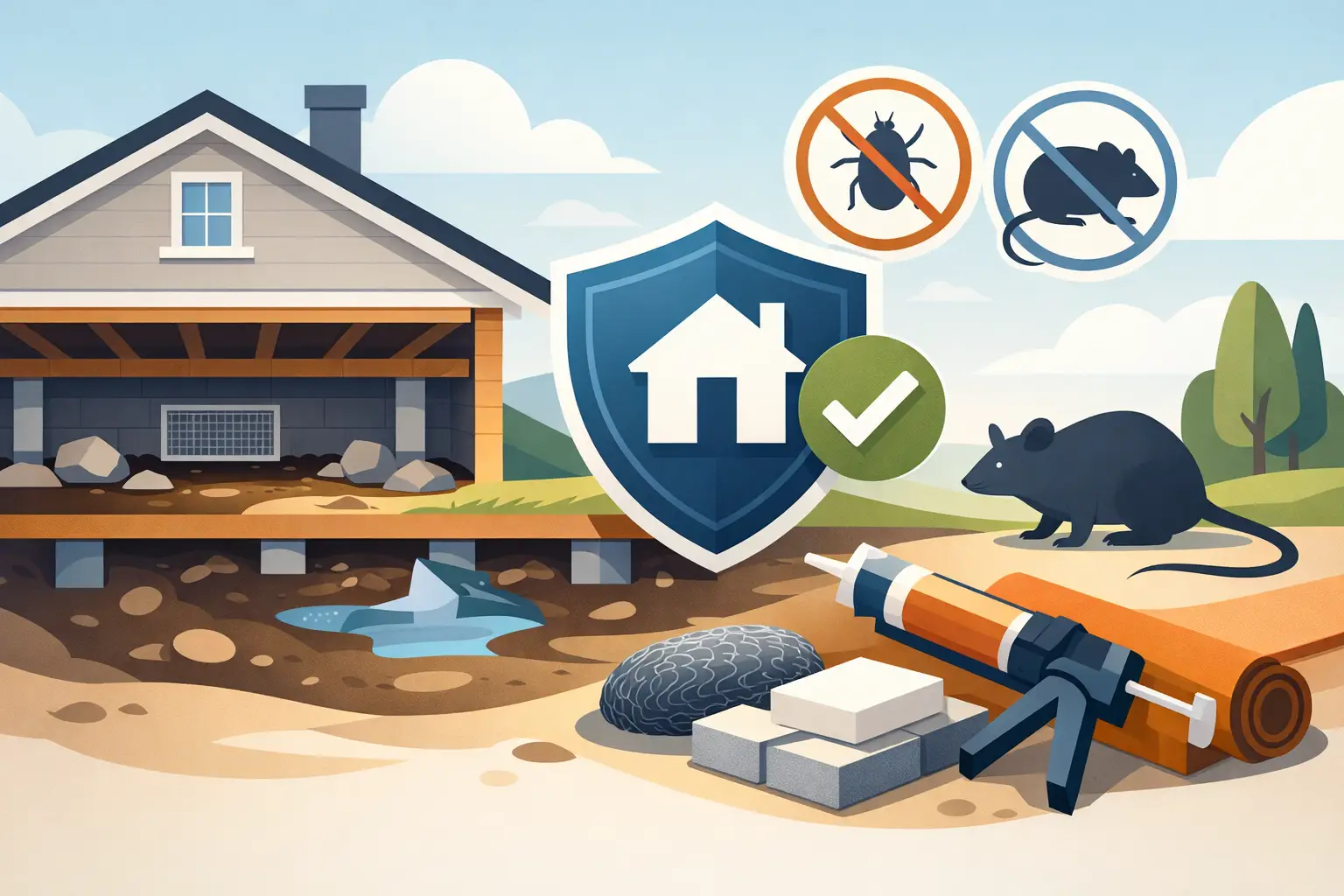
A crawlspace can be quiet for months while rodents, squirrels, and other wildlife turn it into a hidden entry point. This guide to crawlspace exclusion explains how to find those weak spots, close them correctly, and avoid the costly cycle of trapping animals without fixing the reason they got inside.
For homeowners across Kent, Covington, Maple Valley, Auburn, Renton, Bellevue, and South Seattle, crawlspace problems often show up after heavy rain, colder weather, or nearby construction pushes animals to look for shelter. A proper exclusion plan protects more than your peace of mind. It helps protect insulation, wiring, ductwork, stored materials, and indoor air quality.
What Crawlspace Exclusion Really Means
Crawlspace exclusion is the process of preventing pests and wildlife from entering beneath your home by identifying and sealing access points. It is not simply placing a trap near a vent or stuffing a visible hole with foam. Effective work combines inspection, removal or control of any active animals, durable repairs, and a final check for overlooked gaps.
Rodents can fit through openings much smaller than most people expect. Mice may enter through gaps around pipes, damaged vent screens, cracks at the foundation, and openings near utility lines. Rats, squirrels, raccoons, and other wildlife need larger spaces, but they are strong chewers and can widen weak materials over time.
The goal is to make the crawlspace difficult to enter without interfering with the ventilation, drainage, or access your home needs. That balance matters. Completely covering every vent or sealing moisture-related openings without a plan can create a different problem, including damp conditions that invite mold, wood damage, and pests.
Signs Your Crawlspace Needs Attention
A strong odor is one of the most common warning signs. Rodent urine, droppings, nesting materials, and a dead animal can all create smells that travel through floor vents and into living spaces. You may also hear scratching at night, notice chewed wires, find droppings in the garage or kitchen, or see insulation pulled down near the crawlspace access.
Outside, look for bent or missing vent screens, gaps around the foundation, loose lattice, damaged access doors, and soil or debris piled against the home. Fresh digging near the foundation can point to an animal trying to get underneath. Greasy marks, droppings, and worn pathways around a hole are also signs that an opening is active.
Not every crawlspace concern is obvious from above. In South King County, wet weather can hide damaged screens behind vegetation or make foundation gaps harder to see. An inspection is especially worthwhile when a rodent problem keeps returning after traps or bait have been used.
Start With an Exterior Inspection
The outside of the home usually tells the clearest story. Walk the entire foundation slowly and inspect the connection points where different building materials meet. Pay close attention to corners, the area behind shrubs, steps, decks, porches, and locations where cable, plumbing, gas, or electrical lines enter the structure.
Check crawlspace vents for corrosion, tears, loose frames, and screens that have been pushed inward. Standard window screen is not a lasting rodent barrier. A qualified technician can recommend appropriate metal screening or hardware cloth based on the opening and the pest pressure around the property.
Also look upward. Overhanging branches can give squirrels and rats easier access to roofs, gutters, and wall voids. Downspouts that discharge too close to the foundation can contribute to wet soil and damage around vulnerable areas. Exclusion works best when the surrounding conditions do not keep creating new opportunities.
Remove Active Pests Before Sealing Openings
This is where many do-it-yourself repairs go wrong. Sealing an opening while animals are still inside can trap them in the crawlspace, force them into walls or living areas, or leave you with an odor problem later. Before permanent repairs begin, the activity needs to be evaluated.
For rodents, that may involve targeted trapping and monitoring to confirm the population is under control. For squirrels, raccoons, or other wildlife, the approach may require carefully timed one-way exits or humane removal methods. The right method depends on the species, the season, whether babies may be present, and local regulations.
Do not rely on poison as a crawlspace solution. Rodenticides can create secondary risks for pets and wildlife, and rodents may die in inaccessible areas. A dead animal in a wall or crawlspace can quickly replace one problem with another. Exclusion and targeted control provide a more dependable long-term answer.
Use Materials That Match the Entry Point
Good crawlspace exclusion is repair work, not cosmetic patching. The material must withstand chewing, weather, moisture, and normal movement around the structure. Expanding foam alone is rarely enough for a rodent-accessible gap because animals can chew through it.
Small gaps around pipes may need a combination of metal mesh and an exterior-grade sealant. Larger foundation openings may require fitted metal flashing, mortar repair, treated wood, or a reinforced access-door repair. Damaged vent covers should be replaced or reinforced with durable screening that still allows proper airflow.
The best repair depends on what caused the opening. A gap created by shifting soil, a broken vent frame, rotted trim, or a poorly sealed utility line should not all receive the same fix. Addressing the source helps prevent the repair from failing after the next wet season.
Do Not Ignore Moisture and Insulation Damage
A crawlspace with animal activity often has moisture concerns too. Rodents can tear vapor barriers, contaminate insulation, and carry nesting materials into areas where they hold dampness. Water entering through poor drainage or plumbing leaks can make the space more attractive to pests and make repairs deteriorate faster.
After exclusion, inspect the area for soiled insulation, droppings, damaged vapor barrier, standing water, and compromised ductwork. Cleanup should be handled carefully, particularly when rodent droppings are present. Disturbing contaminated material without proper precautions can send particles into the air.
Some homes need a simple repair and cleanup. Others need insulation replacement, vapor-barrier work, drainage improvements, or a more complete crawlspace restoration. A professional inspection can help separate the urgent needs from upgrades that can wait, so you can make an informed decision without overpaying for unnecessary work.
When Professional Crawlspace Exclusion Makes Sense
A homeowner can sometimes repair a clearly visible, minor gap. Professional help is the safer choice when you see repeated rodent activity, suspect animals are already inside, find widespread damage, or cannot safely access the crawlspace. It is also worth calling a licensed pest professional when the opening involves electrical lines, gas lines, structural components, or a difficult-to-identify wildlife issue.
Plateau Pest provides practical rodent control, exclusion repairs, and follow-up support for South King County homes and businesses. A thorough service should start with identifying entry points and active conditions, then build a plan that addresses both. Fast treatment without durable sealing may provide short-term relief, while repairs without resolving an active infestation can leave animals trapped inside.
Ask what materials will be used, which openings will be addressed, and how the work will be checked afterward. Clear answers matter. A dependable exclusion plan should make it easy to understand what is being repaired and why.
Keep the Protection Working
Exclusion is durable, but it is not a one-time excuse to forget about the crawlspace forever. Check the exterior a few times each year, especially after storms, landscaping projects, or home repairs. Keep vegetation trimmed back from the foundation, avoid storing clutter against the house, and repair damaged vent covers promptly.
If you hear scratching again or spot new droppings, act early. A small entry point is easier and less expensive to correct than a long-running infestation with contaminated insulation and damaged wiring. The most useful next step is simple: walk your foundation this week, take note of anything loose or open, and get a professional opinion before a hidden problem becomes a larger repair.