
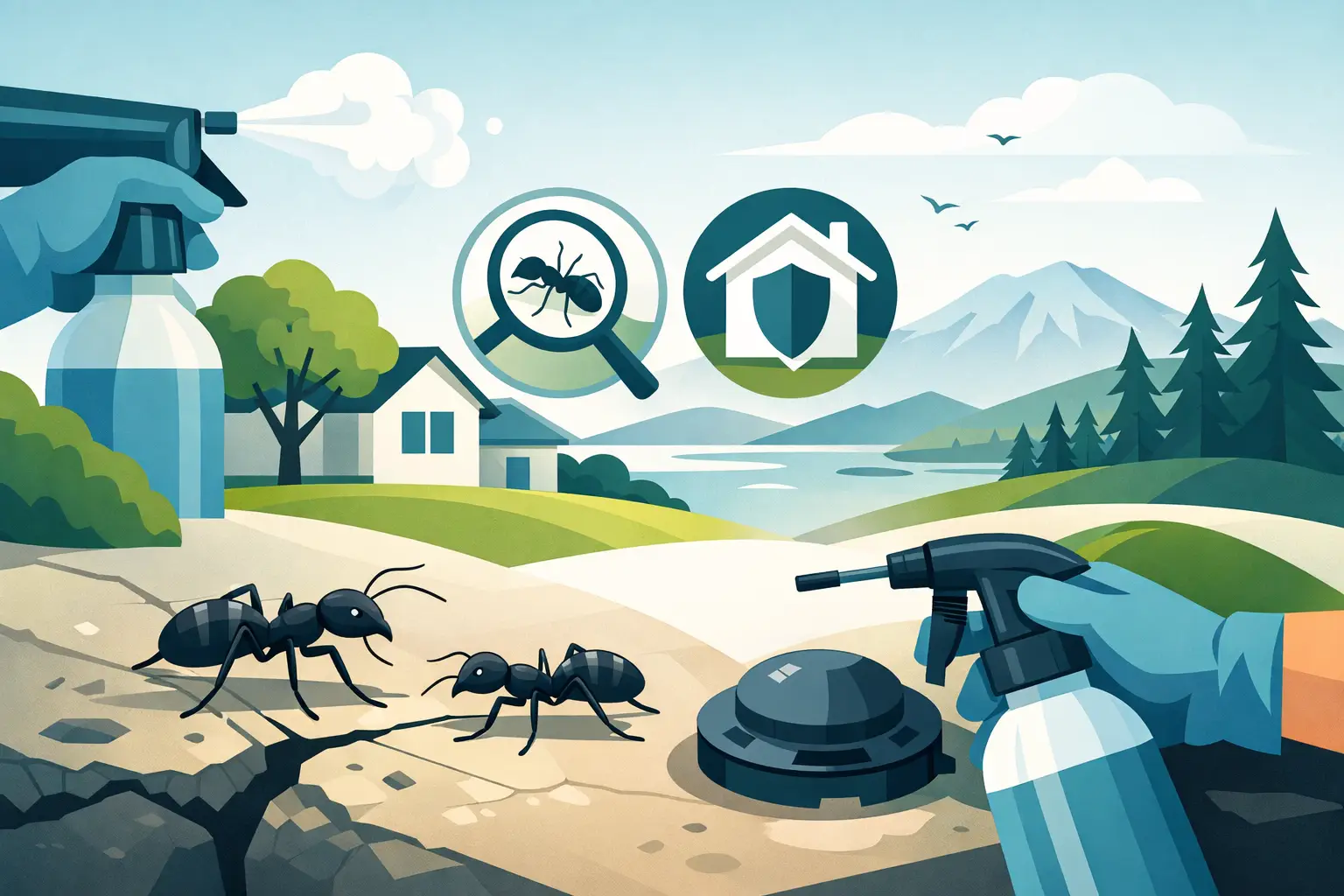
A few ants near the kitchen sink can become a steady trail across the counter within days. In South King County, moisture, rainy weather, and easy access to food can make homes especially inviting to ants. The best ant control methods do more than remove the ants you can see. They target the colony, eliminate the conditions drawing ants indoors, and help keep the next invasion from starting.
For many homeowners, a store-bought spray seems like the quickest answer. It may kill ants on contact, but it often leaves the colony intact. A better approach starts with identifying the activity, using the right treatment method, and closing the gaps that let ants return.
Why Ants Keep Coming Back
Ants enter homes for three basic needs: food, water, and shelter. Crumbs under appliances, pet food bowls, sticky recycling bins, damp areas under sinks, and small cracks around doors or plumbing can all create an easy path indoors.
A visible trail is not usually the full problem. Worker ants leave a scent trail that guides other ants from the nest to the food source. Killing a few workers may disrupt that line temporarily, but another group can find the same source or establish a new trail nearby.
The type of ant also matters. Odorous house ants are common nuisance ants that can form large colonies and move through wall voids. Pavement ants often nest near sidewalks, foundations, and driveways. Carpenter ants need more attention because they may nest in damp or damaged wood. They do not eat wood, but their nesting activity can worsen existing moisture-related damage.
When ants keep returning after repeated cleaning and spraying, the issue is usually a colony nearby, multiple entry points, or a moisture condition that needs to be addressed.
Best Ant Control Methods That Actually Work
The most effective plan combines colony control with practical prevention. The right mix depends on the ant species, the size of the activity, where ants are entering, and whether the property has persistent moisture or structural concerns.
Use bait to reach the colony
Ant bait is often more effective than contact spray for an established indoor ant problem. Worker ants carry bait back to the nest and share it with other ants, which helps address the source rather than only the trail.
Baiting requires patience. It can take several days to see a noticeable decline, and activity may briefly increase as ants recruit more workers to the food source. That is generally a sign that the bait is being accepted. Avoid spraying directly over bait placements, since that can repel ants before they carry the treatment back.
Different ants prefer different food sources. Some are drawn to sweet baits, while others prefer protein or grease-based options. This is one reason a professional inspection can save time. Using the wrong bait may result in very little activity and no meaningful reduction in the colony.
Treat exterior entry points and nesting areas
Exterior treatment is a major part of long-term ant control. Ants often enter through foundation cracks, utility penetrations, window frames, door thresholds, and gaps where siding meets the structure. Treating these pathways helps stop foraging ants before they reach kitchens, bathrooms, break rooms, and storage areas.
A targeted exterior treatment should focus on likely travel routes and nesting zones, not simply cover every surface. Professional products and application methods can be selected based on the property, the ant species, and the level of pressure. For homes with children and pets, proper placement and label-directed use matter just as much as effectiveness.
Outdoor conditions should also be checked. Ants may nest under rocks, landscape timbers, patio edges, mulch, pavers, or vegetation that rests against the home. Addressing these high-traffic zones gives the treatment a better chance of lasting.
Remove food and water sources
Sanitation is not a replacement for treatment when a colony is already established, but it makes every other method more effective. Start with the areas ants use most often: kitchens, pantries, bathrooms, laundry rooms, and pet feeding areas.
Wipe counters and cabinet shelves, sweep up food debris, and store dry goods in sealed containers. Rinse bottles and cans before placing them in recycling. Clean under small appliances when possible, especially toasters, coffee makers, and microwave carts. Pet food should not sit out overnight if ants are actively feeding around the bowl.
Water is just as attractive as food. Repair dripping pipes, dry moisture under sinks, and make sure bathroom fans are working well. Outside, check for clogged gutters, standing water near the foundation, and irrigation that keeps one area of soil consistently wet.
Seal the routes ants use
Exclusion is one of the best ant control methods for reducing repeat problems. Even a tiny opening can be enough for ants to enter, especially around pipes, cable lines, windows, and door frames.
Use appropriate sealant around visible cracks and gaps, replace damaged weatherstripping, and repair torn door sweeps. Trim branches, vines, and shrubs so they do not create a bridge from the yard to the home. Keep mulch and soil from building up against siding, and avoid stacking firewood directly beside the structure.
Sealing alone will not remove a colony that is already indoors. It works best after baiting or targeted treatment has reduced the active population.
When Sprays Help and When They Do Not
Contact sprays have a place for quick relief when ants are visible in a specific area. They can reduce activity immediately and may be useful around a limited exterior nest. The trade-off is that they usually do not eliminate hidden colonies, and excessive indoor spraying can scatter certain ants into new areas.
Repellent products may also push ants away from one route without solving the reason they entered. That can make the problem appear to disappear, only for ants to show up later in another room.
If you choose a do-it-yourself product, follow the label exactly and keep it away from food preparation surfaces, children, pets, and pollinators. Never mix products or apply more than directed. More product does not necessarily mean better ant control.
Carpenter Ants Need a Faster Response
Large black ants indoors, especially near windows, sinks, crawl spaces, or damp wood, deserve a closer look. Carpenter ants are often associated with moisture-damaged areas, including leaking roofs, poorly ventilated spaces, soft window trim, or wood near plumbing leaks.
Seeing one carpenter ant does not automatically mean there is structural damage. Seeing repeated activity, large numbers indoors, winged ants, or coarse sawdust-like material near wood can point to a nesting issue. A professional inspection can help determine whether ants are nesting in the building, traveling in from outside, or taking advantage of an existing moisture problem.
The right solution may include targeted treatment, locating satellite nests, and repairing the moisture condition that made the area appealing in the first place.
Ant Control for Apartments, Offices, and Commercial Properties
Ant activity in a multi-unit building or business needs a coordinated plan. Treating one office, apartment, or suite may offer short-term relief, but ants can move through wall voids, utility lines, shared landscaping, and connected structural spaces.
Property managers should document where activity is occurring, whether it is concentrated near kitchens or break rooms, and whether tenants have noticed moisture or maintenance issues. Food-service businesses, medical offices, retail spaces, and warehouses benefit from discreet, scheduled service that protects operations while addressing active pest pressure.
For commercial properties, ongoing prevention is often more practical than waiting for a visible trail. Regular monitoring, exterior protection, sanitation guidance, and quick follow-up can reduce disruptions and protect a business’s reputation.
When to Call a Professional
It is time to bring in professional help when ants keep returning after baiting, multiple rooms are affected, you see carpenter ants, or the property has a likely moisture or structural issue. Professional service is also a smart choice when you need treatment that is carefully applied around children, pets, customers, or employees.
A local provider can inspect the property, identify likely entry points, select the appropriate treatment, and recommend prevention steps based on the way homes and businesses are built in South King County. Plateau Pest provides responsive ant control with EPA-approved products, practical treatment plans, and unlimited free follow-up visits so customers are not left dealing with a returning trail alone.
A clean counter can remove tonight’s food source, but lasting relief comes from treating the colony and closing the path that brought it inside. If ants have made themselves at home, acting early is usually faster, simpler, and more affordable than waiting for the trail to spread.