
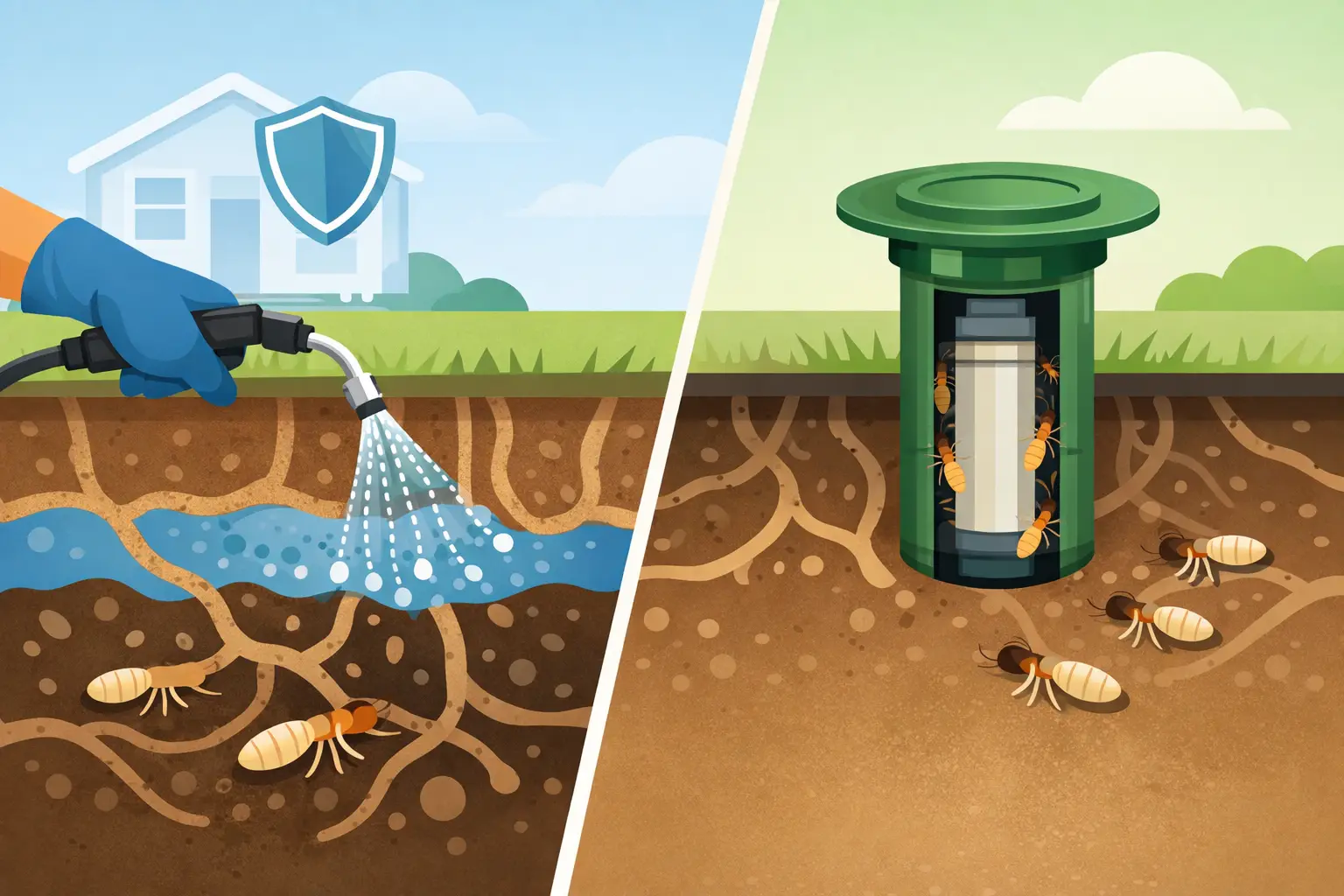
A termite problem can stay hidden for months, then show up as damaged trim, soft flooring, or hollow-sounding wood when the damage is already underway. When comparing termite treatment vs bait stations, the right answer depends on whether termites are active now, how your home is built, and whether your priority is immediate control, long-term monitoring, or both.
For homeowners and property managers in Kent, Auburn, Renton, Maple Valley, Bellevue, and surrounding South King County communities, a professional inspection should come first. Termites work below ground and inside wood, so the visible signs rarely tell the whole story.
Termite Treatment vs Bait Stations: The Main Difference
Traditional termite treatment typically means a liquid treatment placed in the soil around a structure and, when needed, in targeted areas where termites are active. The goal is to create a treated zone between subterranean termites in the soil and the wood in your home or business.
Bait stations work differently. Small stations are placed in the ground around the property. They are monitored for termite activity, and active stations receive a bait that termites feed on and share with the colony. Instead of creating a barrier, baiting is designed to affect the colony over time.
Both methods can be effective when installed and maintained correctly. The key difference is speed and strategy: liquid treatments are usually the faster choice for stopping active termite entry, while bait stations are often used for ongoing detection and colony control.
When a Liquid Termite Treatment Makes Sense
A liquid soil treatment is often recommended when an inspection finds active termites entering the structure. If there are mud tubes on the foundation, active damage in a crawl space, or termites found during a renovation, homeowners usually want a solution that acts quickly.
The treatment is applied strategically around the foundation and other identified entry points. Depending on the construction, a technician may need to treat along exterior soil, around porches or utility lines, or in accessible crawl-space areas. Homes with concrete slabs, additions, patios, and attached garages may require more detailed planning because termites can find small gaps in unexpected places.
Benefits of liquid treatment
The biggest advantage is direct protection. A properly installed liquid treatment gives termites a treated zone to encounter as they move between the soil and the structure. This makes it a strong option when the priority is stopping an active infestation and protecting the building right away.
It can also be a practical choice when a property has a known history of termite activity. A one-time treatment may be more straightforward than waiting for termites to locate bait stations, especially when evidence shows they are already feeding on the home.
Modern professional products are selected and applied according to label directions and site conditions. A licensed provider should explain where treatment is needed, what areas will be accessed, and what to expect afterward. That matters for families, pets, tenants, and businesses that need effective service with minimal disruption.
Limits to consider
Liquid treatment is not a set-it-and-forget-it guarantee. Soil can be disturbed by landscaping, construction, drainage changes, erosion, or new additions. Termite pressure can also change over time. Regular inspections remain valuable, particularly in homes with crawl spaces, moisture issues, or wood close to the ground.
Not every foundation is easy to treat. Tight access, extensive hardscaping, and unusual construction details can make a complete treatment more involved. In those cases, a baiting system or a combined plan may provide better coverage.
When Termite Bait Stations Are a Better Fit
Bait stations are built around monitoring and patience. A technician installs stations in the soil around the property, then checks them on a scheduled basis. When termites begin feeding in a station, the active bait is introduced and monitored until the activity declines.
This approach is especially useful for properties where ongoing detection is a priority. It may also be a good fit when a homeowner wants a lower-impact approach around a complex foundation, landscaped areas, or locations where liquid application is less practical.
Benefits of bait stations
Bait stations can identify termite activity before a homeowner notices damage. Since subterranean termites travel underground, having monitored stations around the property adds an early-warning layer that a one-time inspection cannot provide.
They are also designed to target the colony through termite feeding behavior. That is an important benefit, but it should be understood realistically: bait systems work on the termites’ schedule. Termites must find and feed on the bait, and colony suppression takes time.
For a home with no current damage but a concern about future termite activity, bait stations can be a sensible long-term prevention and monitoring choice. They are also commonly used after an active issue has been addressed, providing continued oversight around the structure.
Limits to consider
Bait stations are not the fastest response to visible, active damage. If termites are currently entering your home, relying on bait alone may leave you waiting while they continue feeding elsewhere. That does not make bait ineffective. It simply means it may not be the best standalone answer for every active infestation.
Bait systems also require regular professional service. Stations must be checked, maintained, and documented. A neglected bait system is not providing the same protection as one that is consistently monitored.
Which Option Is Better for Washington Properties?
There is no universal winner in termite treatment vs bait stations. The condition of the property should drive the decision.
If active termites are found in the structure, a liquid treatment is often the first recommendation because it can provide more immediate protection at known entry points. If there is no active evidence inside the home but the goal is early detection and ongoing coverage, bait stations may be the stronger fit.
A combination can be the most practical plan for some properties. For example, targeted liquid treatment can address active areas while bait stations provide ongoing monitoring around the rest of the foundation. This approach is especially helpful for homes with complicated layouts, past termite damage, or conditions that increase risk.
Moisture is another major factor in the Pacific Northwest. Leaking exterior faucets, poor drainage, standing water near the foundation, clogged gutters, and damp crawl spaces can make a property more appealing to wood-damaging pests. Correcting these conditions does not replace termite control, but it reduces the environmental issues that can support pest activity.
What a Professional Termite Inspection Should Include
Before choosing a treatment, ask for a clear inspection and recommendation. A reliable provider should look for evidence of activity, likely entry points, damaged or moisture-affected wood, and construction features that could affect treatment.
The inspection should also distinguish termites from other wood-damaging pests. Carpenter ants, moisture-related wood rot, and certain beetles can create signs that look similar from a distance. Treating the wrong problem wastes time and money.
At Plateau Pest, the goal is to give local homeowners and businesses a practical recommendation based on what is actually happening at the property. That means explaining whether immediate treatment, ongoing bait monitoring, exclusion and moisture corrections, or a combination of services makes the most sense.
How to Choose With Confidence
Start with the urgency of the problem. Active termites, fresh mud tubes, or visible damage call for a prompt inspection and a plan designed to stop access to the structure. Do not wait to see whether the activity disappears on its own.
Next, consider the property long term. A bait station program may be worthwhile if you want consistent monitoring, have a history of termite issues, or own a property where early detection can prevent expensive surprises. For rental homes and commercial properties, documented monitoring can also support proactive maintenance planning.
Finally, look beyond the treatment itself. Ask how follow-up visits work, how often the property will be inspected, and what happens if new evidence appears. Termite control is most effective when it includes professional assessment, clear communication, and continued attention to the conditions around your home.
If you suspect termites, protect the structure before damage grows. A thorough inspection can turn an uncertain choice into a clear, affordable plan that fits your property and gives you confidence moving forward.