
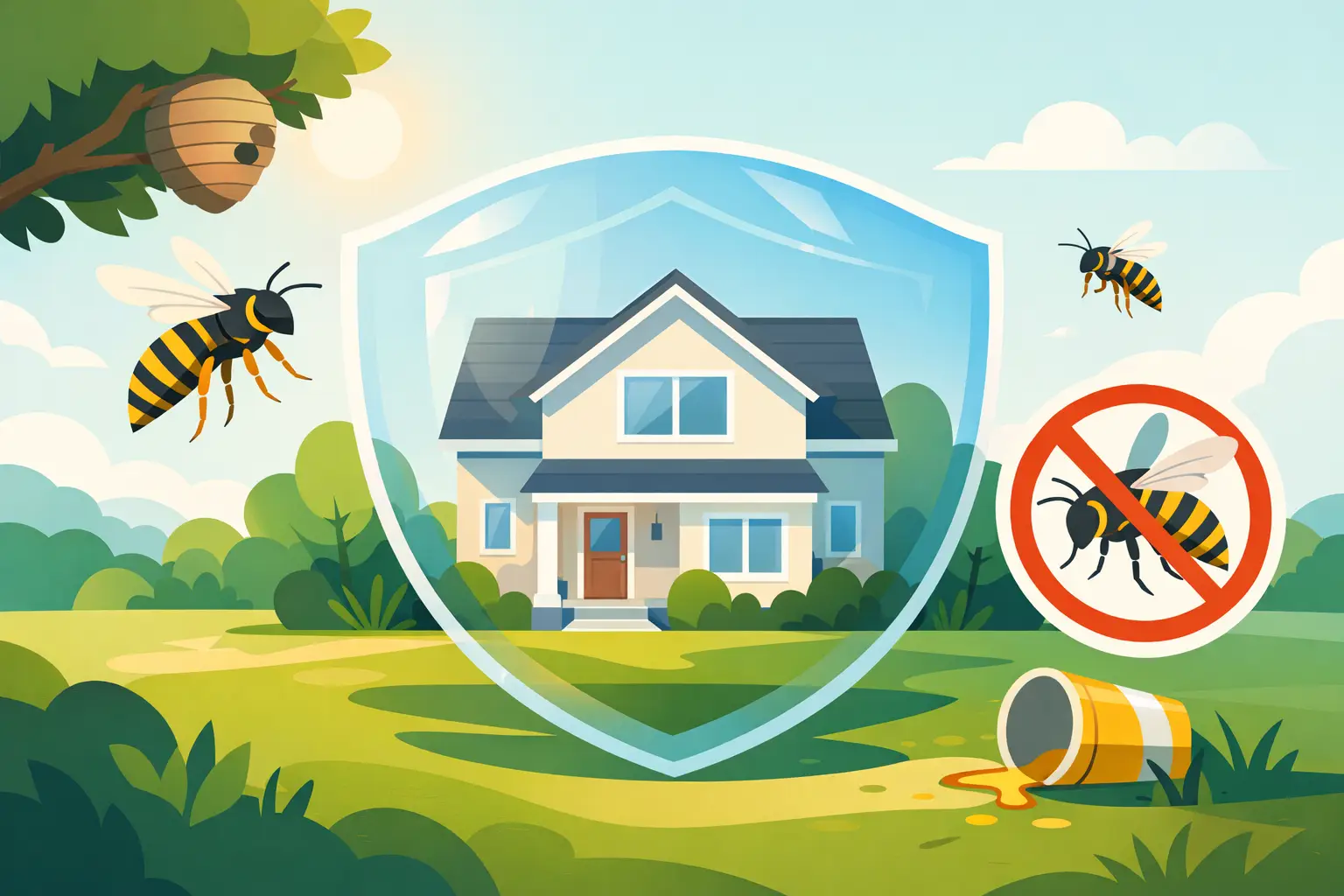
A wasp circling the patio during a Kent backyard barbecue is annoying. A steady stream of them disappearing into a roofline, wall gap, or deck opening is a different problem entirely. Knowing how to keep wasps away starts with removing what draws them in, then acting early before a small nest becomes a safety concern for your family, pets, guests, or customers.
Wasps are most noticeable in South King County from late spring through early fall. Early in the season, queens look for protected places to start nests. By late summer, established colonies can become more active around food, trash, and outdoor gathering spaces. A few prevention habits can make your property far less appealing without turning your yard into a place that is difficult to enjoy.
How to Keep Wasps Away: Remove What Attracts Them
Wasps are looking for food, water, and shelter. The best prevention plan addresses all three. It is more effective than relying on scented sprays or hanging a single decoy nest and hoping for the best.
Keep food and sweet drinks covered outdoors
Yellowjackets and other wasps are especially attracted to sweet drinks, fruit, desserts, meat, and protein-rich foods. This is why they often show up at picnics, outdoor parties, restaurant patios, and open garbage cans.
When eating outside, use lids or mesh food covers, wipe spills as soon as they happen, and avoid leaving plates sitting out after a meal. Rinse cans and bottles before placing them in recycling, particularly if the container will sit in a garage or outdoor bin. If you have hummingbird feeders, clean up leaks and use a design with bee guards. A feeder that drips sugar water can attract more than hummingbirds.
Manage garbage, compost, and fallen fruit
Trash is one of the biggest wasp attractants around homes and commercial properties. Use garbage cans with tight-fitting lids, clean sticky residue from the outside of bins, and place them away from doors, patios, and play areas when possible.
Compost can also attract wasps if it contains exposed food waste. Keep compost covered and balance food scraps with dry material. If your property has apple, pear, plum, or other fruit trees, pick up fallen fruit regularly. Rotting fruit is an easy meal for wasps and can bring them closer to the house.
Eliminate easy water sources
Wasps need water, especially during dry, warm stretches. Check for dripping hose connections, leaking outdoor faucets, clogged gutters, and standing water around planters or tarps. Birdbaths and pet water bowls do not have to disappear, but they should be placed farther from patios, doors, and areas where people gather.
A small change in placement can make a noticeable difference. The goal is not to eliminate every source of water outdoors. It is to keep water away from the spots where wasp activity would be most disruptive.
Make Your Home Harder to Nest In
Food attracts foraging wasps, but sheltered gaps give queens and colonies a place to settle. Paper wasps often build open, umbrella-shaped nests under eaves, porch ceilings, and deck rails. Yellowjackets may nest in wall voids, crawlspaces, landscaping, or old rodent burrows. Hornets commonly choose trees, shrubs, and protected exterior structures.
Seal entry points before wasp season
Walk around your home on a dry day and look closely at eaves, fascia boards, soffits, attic vents, utility openings, and gaps where siding meets trim. Repair damaged screens, replace loose vent covers, and seal small exterior gaps with appropriate materials.
Timing matters. Sealing an opening while wasps are actively using it can trap insects inside a wall or push them into the living space. If you see regular wasp traffic entering one specific gap, do not immediately seal it. Have the nest location assessed and treated first, then complete the exclusion work after activity has stopped.
Maintain decks, sheds, and outdoor structures
Wasps favor quiet, protected spaces that are not disturbed often. Check under deck edges, outdoor furniture, grills, play structures, shed eaves, and porch roofs every few weeks from spring onward. Early nests are typically smaller and easier to address than late-season colonies.
Keep shrubs and branches trimmed back from the house, particularly near windows, rooflines, and utility equipment. This does not guarantee that wasps will stay away, but it reduces sheltered pathways and makes it easier to spot activity before a nest grows.
Be careful with repellents and decoy nests
Many home remedies promise quick results, including peppermint oil, dryer sheets, fake nests, and strongly scented products. Some may briefly discourage wasps in a small area, but they are not dependable solutions for an active nest or a recurring property-wide problem.
Use these products only as a minor part of prevention, not as your main plan. Strong scents can also bother children, pets, customers, or neighbors, and outdoor weather quickly reduces their effect. Cleaning up food sources and sealing nesting sites delivers more reliable results.
What to Do When You Find a Wasp Nest
The right response depends on where the nest is, how large it is, and what type of wasp is involved. A tiny, exposed paper wasp nest far from doors and high-traffic areas may not require immediate action. Wasps do help control some garden pests, so there is a reasonable trade-off when the nest is well away from people.
That trade-off changes quickly when a nest is near an entrance, children’s play area, pet run, outdoor dining space, or workplace. It also changes when you see yellowjackets entering a hole in the ground or an opening in the home. These colonies can be larger, more defensive, and difficult to remove safely without the right equipment.
Do not knock down, burn, flood, or seal an active nest. Avoid spraying a nest during the day, when many foraging wasps are away and may return agitated. Never use gasoline or other flammable liquids. These methods can create a much greater hazard than the nest itself.
Instead, keep people and pets away from the area, avoid sudden movements around the nest, and watch from a safe distance to identify where wasps are entering and leaving. If the nest is inside a wall, under a deck, high in a roofline, underground, or near a frequently used area, professional removal is the safer choice.
When Fast Professional Wasp Removal Makes Sense
Call for help promptly if someone in the household has a known sting allergy, if wasps are entering the structure, or if activity is increasing day by day. Businesses should also act quickly when wasps are near customer entrances, dumpster areas, patios, loading zones, or employee break spaces. A sting incident can disrupt operations and create a real liability concern.
A licensed pest professional can identify likely nesting areas, treat the active colony, and recommend exclusion steps that reduce the chance of another nest in the same location. Plateau Pest provides responsive wasp removal for homes and businesses throughout Kent and surrounding South King County communities, using EPA-approved treatment options and follow-up support when needed.
If wasps are only passing through your yard, focus on food, water, and shelter prevention. If they are repeatedly returning to one spot or defending a nest near the home, treat that activity as an early warning. Addressing it now is usually safer, simpler, and less stressful than waiting until the colony is at full strength.