
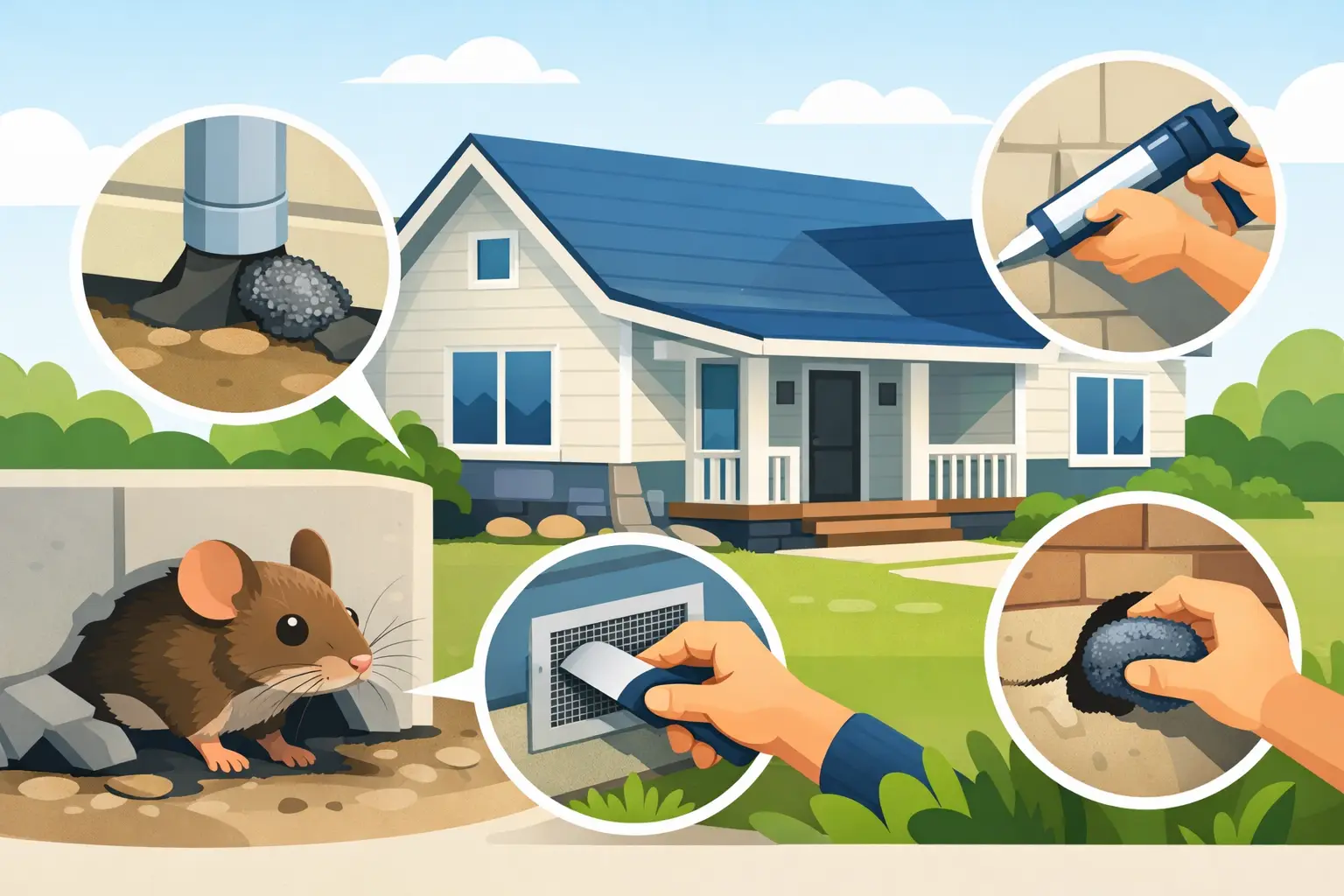
A mouse does not need an open door to get inside. It can fit through a gap about the width of a pencil, then follow wall voids, crawlspaces, and utility lines until it finds food, warmth, or nesting material. Knowing how to seal mouse entry points gives you a practical way to stop repeat rodent activity before it becomes a larger problem.
For homeowners and property managers in South King County, the best approach is not simply filling every visible crack. Effective exclusion starts with a careful inspection, uses materials mice cannot chew through, and addresses the conditions that keep drawing rodents back.
Start Outside and Inspect the Whole Structure
Mice typically enter at ground level, but they can also climb siding, pipes, vines, and stacked materials to reach openings higher on a home. Walk the exterior slowly in daylight. Look closely at the foundation, corners, steps, garage, doors, windows, roofline, and every place where a wire, pipe, hose, or cable enters the building.
Pay special attention to gaps near air-conditioning lines, dryer vents, gas lines, hose bibs, and electrical conduits. A hole that looks too small to matter may still be large enough for a mouse. Check around attached garages and sheds, too. These spaces often provide easy access to the home through shared walls or utility openings.
On the inside, inspect under sinks, behind appliances, around the water heater, in the laundry room, and near the furnace or crawlspace access. Droppings, shredded paper or insulation, grease marks along walls, and a musty odor can help identify the routes rodents are already using.
How to Seal Mouse Entry Points With Lasting Materials
Not all patching materials work for rodent exclusion. Mice can chew through plastic, wood, rubber, standard caulk, and expanding foam when those materials are used alone. Foam can help close an irregular void, but it should support a chew-resistant barrier rather than serve as the barrier itself.
Choose the material based on the size and location of the opening:
- For small gaps around pipes or wiring, pack copper mesh or stainless-steel wool into the opening, then seal the edge with exterior-grade caulk.
- For cracks and small foundation gaps, use a durable mortar or concrete repair compound where appropriate.
- For larger holes in siding, soffits, walls, or vents, fasten galvanized hardware cloth or sheet metal over the opening.
- For door gaps, install a sturdy door sweep and replace worn weatherstripping around exterior doors, garage doors, and crawlspace access panels.
- For vents, use rodent-resistant vent covers that preserve proper airflow. Never block a dryer vent, furnace vent, plumbing vent, or other system that needs ventilation.
Hardware cloth should be fine enough to block rodents, generally with openings no larger than 1/4 inch. Secure it with screws and washers rather than relying on adhesive alone. For damaged wood around a gap, repair the underlying structure before covering it. Otherwise, moisture and chewing can create a new opening behind the patch.
Do Not Seal Mice Inside the House
Exclusion works best after you have considered whether mice are currently active indoors. Sealing every opening while rodents are still inside may push them deeper into walls, ceilings, or storage areas. It can also lead to odor issues if a mouse dies in an inaccessible space.
If you are seeing fresh droppings, hearing scratching at night, finding chewed food packages, or catching mice regularly, start with trapping and sanitation while identifying entry points. Snap traps placed along walls in protected areas are often more effective than placing them in the middle of a room. Keep traps away from children and pets, and follow product instructions carefully.
For a larger infestation, activity in a crawlspace or attic, or signs of rats as well as mice, professional rodent control is usually the safer choice. A trained technician can help identify active travel routes, remove the existing problem, and complete exclusion in the right order.
Focus on the Most Common Trouble Spots
A complete inspection can feel overwhelming, so begin with the locations most likely to create access. Foundation penetrations are a top priority, especially on older homes where caulk has shrunk or settled. Gaps beneath siding, loose crawlspace vents, and openings around garage corners are also common.
Doors deserve close attention. If daylight shows beneath an exterior door or garage door, a mouse may be able to enter. Replace cracked sweeps and weatherstripping instead of trying to patch them repeatedly. Make sure the door closes evenly, since an uneven threshold can leave one side exposed.
Roof and attic entry points may be less obvious. Check for damaged soffits, loose fascia boards, unprotected roof vents, and gaps where utility lines run upward. Trim tree branches and climbing vines away from the structure. This will not seal an opening by itself, but it removes an easy route to it.
Reduce What Attracts Mice After Sealing
Sealing openings is the strongest long-term step, but it works better when mice have fewer reasons to stay near the property. Store pantry food, pet food, birdseed, and bulk items in hard-sided containers with tight-fitting lids. Clean crumbs under appliances and avoid leaving pet bowls out overnight when possible.
Outside, keep garbage lids closed and avoid placing birdseed or pet food near the home. Move firewood, lumber, cardboard, and dense vegetation away from the foundation. A clear strip around the house makes inspections easier and removes hiding places that let rodents approach unnoticed.
Moisture matters as well. Repair dripping outdoor faucets, leaking pipes, and poor drainage near the foundation. Mice need water, and damp areas can also attract insects that become another food source.
When DIY Exclusion Is Enough and When It Is Not
A homeowner can often handle a few visible gaps around a door, pipe, or small foundation crack. This is especially true when there are no signs of an established indoor infestation. Take your time, use chew-resistant materials, and recheck each repair after a few weeks.
Professional help makes sense when entry points are high on the roofline, hidden behind siding, located in a tight crawlspace, or tied to structural damage. It is also a better option for rental properties, restaurants, offices, and other commercial spaces where rodent activity can affect residents, customers, inventory, or inspections.
Plateau Pest provides local rodent control and exclusion support for homes and businesses across South King County, with practical recommendations for the conditions found on your property. A proper inspection can reveal the openings that are easy to miss and help prevent a cycle of trapping mice without stopping new ones from entering.
Recheck Your Work Through the Seasons
Rodent pressure can change with the weather. In the fall and winter, mice often seek warmth indoors. In spring, landscaping work, rain, and shifting soil can reveal new foundation gaps or damage older repairs. Check your exterior at least twice a year and after storms, construction projects, or repairs involving utility lines.
Watch for fresh droppings or new gnaw marks after you seal an area. One new sign does not always mean a repair failed, but repeated activity near the same location is a reason to inspect again. The goal is not a one-time patch. It is a home that stays difficult for rodents to enter, settle into, and return to.