
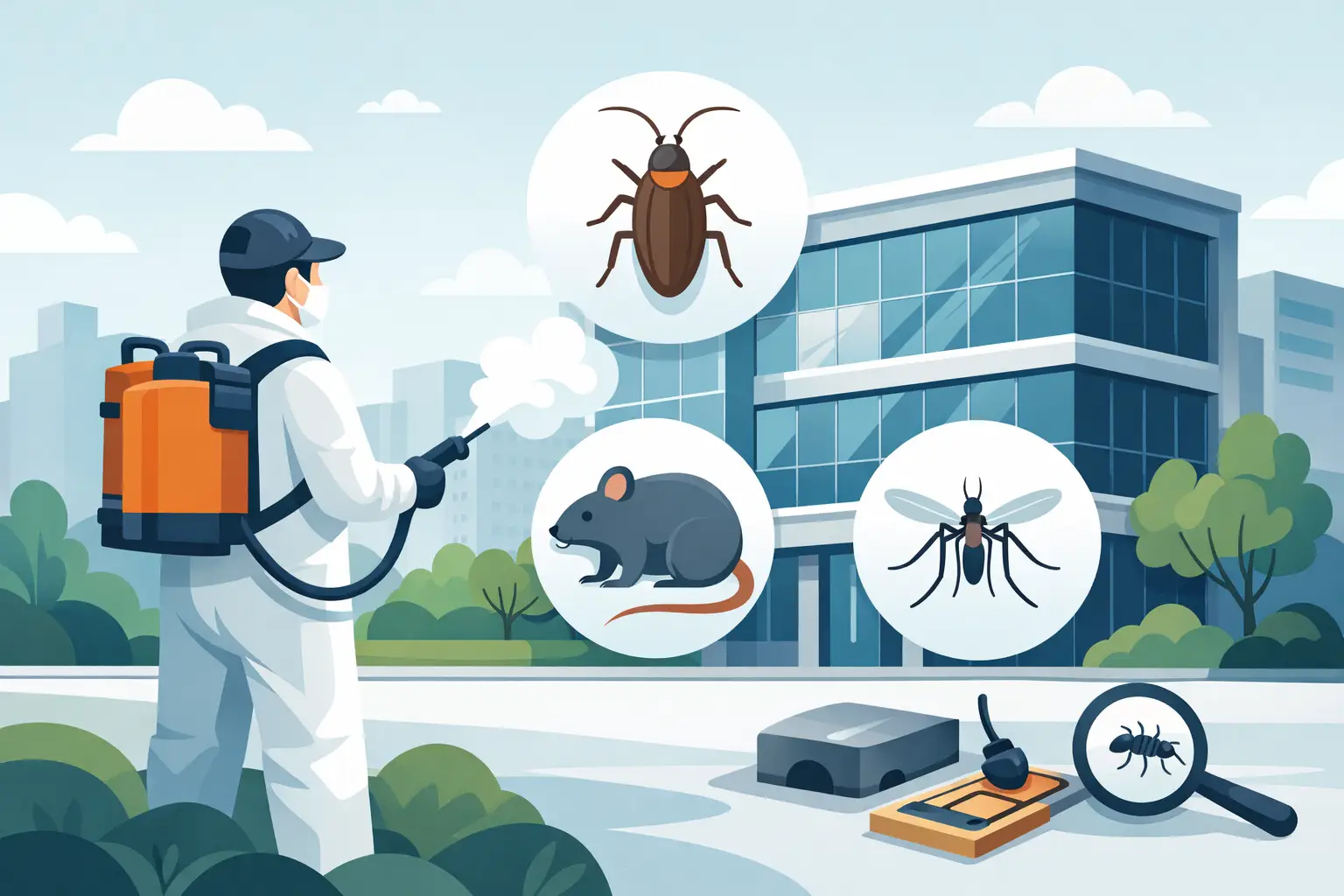
A single cockroach in a break room or one rat spotted near a loading dock can turn into a tenant complaint, a failed inspection, or a bad review fast. Pest control for commercial buildings is not just about removing a current problem. It is about protecting your staff, customers, property, and reputation before a small issue becomes an expensive one.
For business owners and property managers in South King County, the stakes are higher than they are in most homes. Commercial spaces have more foot traffic, more delivery points, more hiding places, and more pressure to stay open without disruption. That means pest management needs to be responsive, safe, and built around long-term prevention, not quick fixes.
Why pest control for commercial buildings matters
In a commercial setting, pests do more than create discomfort. They can interrupt operations, damage inventory, contaminate food or shared spaces, and make employees or customers question whether the building is being properly maintained. For offices, warehouses, retail spaces, medical facilities, restaurants, and multi-tenant properties, the impact can show up in different ways, but the risk is the same.
Rodents chew wiring, insulation, packaging, and stored materials. Cockroaches spread bacteria and thrive in hidden moisture. Ants can move quickly through break rooms, kitchens, and wall voids. Wasps near entrances create a safety concern for employees and visitors. Birds around rooftops and signage can leave behind mess and damage. Even spiders, while often more of a nuisance than a threat, can affect how clean and professional a space feels.
The challenge is that commercial infestations often start quietly. By the time someone notices droppings, damaged goods, grease marks, nests, or repeated sightings, the activity has usually been building for a while. That is why commercial pest control works best when it is preventive, not just reactive.
What makes commercial buildings different
Pest issues in commercial properties are rarely one-size-fits-all. An office building has different risk points than a restaurant. A warehouse has different conditions than a daycare center. Even two retail spaces in the same strip mall can face different pressure depending on waste handling, storage setup, and customer traffic.
That is why the right service starts with inspection and context. Entry points around doors, utility lines, roof gaps, drains, dumpsters, and loading areas all matter. So do sanitation routines, landscaping, standing water, and how materials are stored indoors. In many buildings, the pest problem is not caused by one big issue. It is several smaller vulnerabilities working together.
This is also where trade-offs come into play. A one-time treatment can solve an immediate pest spike, but if the building has recurring pressure from shared walls, food handling, or frequent deliveries, that approach may not hold for long. On the other hand, a recurring service plan is often the better fit for properties that need year-round monitoring and fast follow-up without repeated scrambling.
Common pests in South King County commercial properties
In Kent, Covington, Auburn, Renton, Bellevue, Maple Valley, and South Seattle, commercial buildings often deal with a familiar group of pests. Rodents are a major concern, especially as temperatures change and they look for warmth, food, and shelter indoors. Cockroaches are common anywhere moisture, food debris, or clutter give them cover. Ants become a recurring issue in kitchens, offices, and customer-facing spaces, especially in warmer months.
Wasps tend to show up around eaves, entrances, and outdoor gathering areas. Spiders can build up in storage zones, utility areas, and quieter corners of a property. Birds become a larger issue on rooftops, ledges, and signs, particularly for retail centers and warehouses. Depending on the property type, bed bugs, squirrels, or termites may also need attention.
The point is not to overcomplicate the list. It is to recognize that different pests require different strategies. Spraying the visible area is rarely enough if the source is behind walls, above ceilings, under concrete edges, or around exterior access points.
What good commercial pest service should include
Effective pest control for commercial buildings starts with a clear plan. That plan should identify the pest, locate the activity, address the immediate issue, and reduce the conditions that allowed it in the first place. If any of those pieces are missing, the problem is more likely to return.
A strong commercial program usually includes a detailed inspection, targeted treatment, and exclusion recommendations. In plain terms, that means finding out where pests are entering, where they are nesting or feeding, and what can be done to keep them from coming back. Cracks, gaps, door sweeps, roofline openings, and damaged vents often play a bigger role than business owners expect.
It should also include practical follow-up. Commercial spaces are busy. Staff changes happen. Tenants rotate. Waste areas get overlooked. A service plan that includes unlimited free follow-ups offers peace of mind because it gives you a way to respond quickly if activity shows up again between scheduled visits.
Safety matters too. In occupied workplaces, especially around customers, employees, food service, or sensitive environments, treatment needs to be effective without creating unnecessary risk. EPA-approved products and careful application methods help protect the people using the space every day while still addressing the pest issue at the source.
How to choose the right approach for your building
The right service level depends on the type of property, the pest pressure, and how much risk your operation can tolerate. If you run a restaurant, medical office, childcare space, or any business where cleanliness and inspections are closely watched, ongoing pest management is usually the smart move. These environments benefit from consistent monitoring and documentation, not just emergency service.
If you manage an office suite or small retail location with a single, isolated issue, a one-time treatment may be enough if the source is clearly identified and corrected. But even then, it depends on the layout of the building. Shared walls, common trash enclosures, and neighboring tenants can make isolated problems less isolated than they look.
Fast response also matters more in commercial work. Waiting several days to handle a rodent sighting in a customer-facing business can create unnecessary stress and exposure. Same-day or next-day availability is not just convenient. In many cases, it helps contain the problem before it spreads.
Preventing repeat pest problems
Treatment is only part of the job. Long-term results come from making the building less attractive and less accessible to pests. That often means improving sanitation, reducing clutter, sealing entry points, managing moisture, and adjusting how inventory or waste is stored.
For example, rodents are far easier to control when food is sealed, exterior gaps are closed, and dock doors are not left open longer than necessary. Cockroaches are harder to eliminate when leaks, floor drains, or break room crumbs keep feeding the problem. Ant control often improves when sweet residues, standing water, and landscape-to-building contact are addressed at the same time.
This is where working with a local, experienced provider helps. A family-owned company that knows the pest patterns in South King County can spot the issues that tend to repeat in this region and recommend fixes that make sense for your property, your schedule, and your budget. Plateau Pest serves commercial clients across the area with fast response times, affordable recurring plans, and unlimited free follow-ups, which is exactly the kind of support many business owners need when the goal is staying ahead of the problem, not chasing it.
Signs it is time to call now
Some warning signs should not wait. Live pest sightings during business hours, droppings, gnaw marks, grease trails, insect casings, nests near entryways, scratching sounds in walls, or repeat employee reports all point to active pressure. So does any pest activity in food prep, storage, or customer-facing areas.
Even if the signs seem minor, the cost of waiting can climb quickly. A small issue is easier to treat, easier to document, and less disruptive to fix. Once pests spread through walls, storage areas, or shared building systems, control usually becomes more involved.
Commercial pest control is really about protecting the everyday work your building needs to support. When service is fast, safe, and consistent, you can focus on running the business instead of reacting to the next complaint or surprise sighting. The best time to deal with a pest problem is before your customers notice it.