
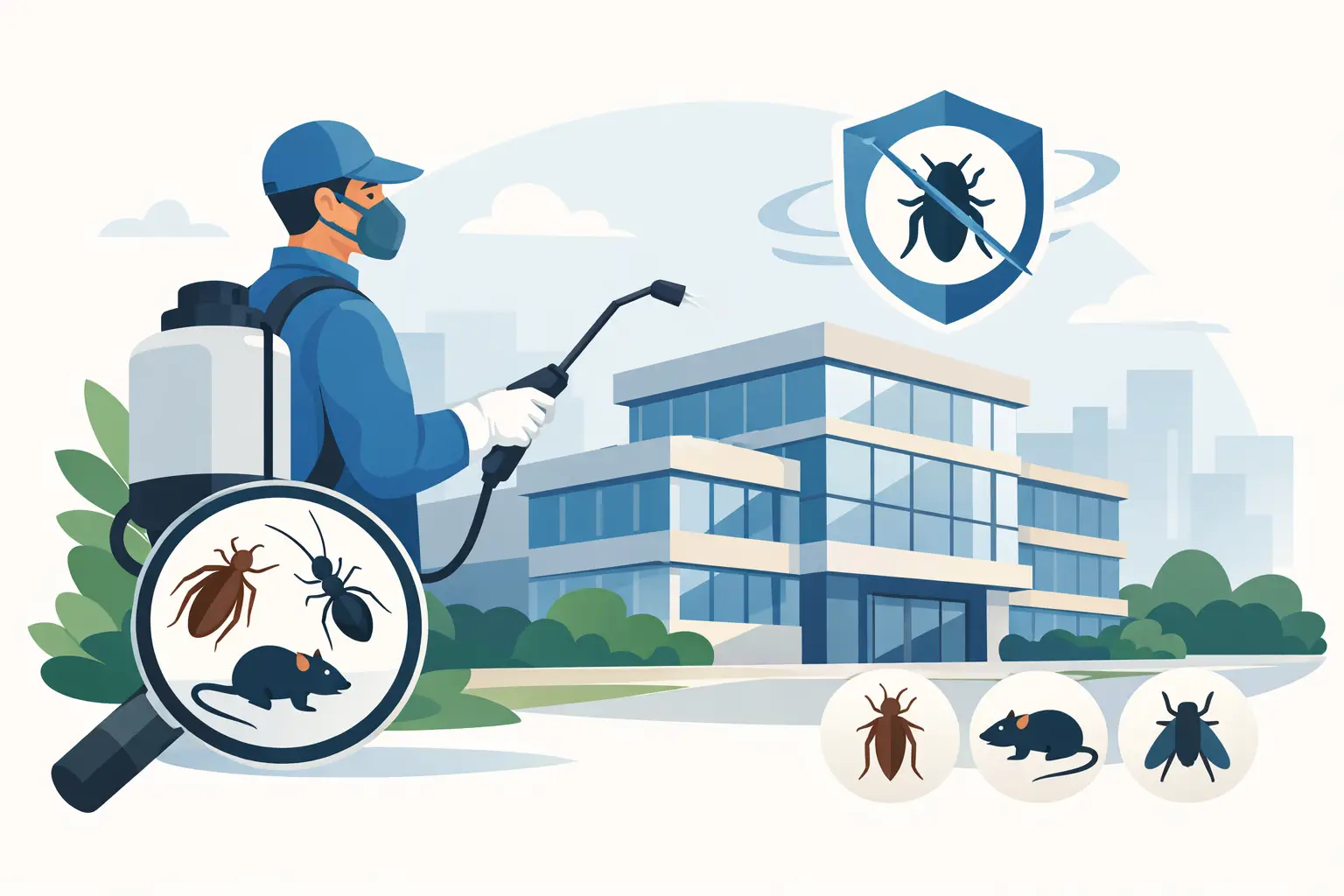
A single mouse sighting in a break room can turn into customer complaints, failed inspections, damaged inventory, and a stressful week for your staff. That is why business owners often ask, what is commercial pest control, and how is it different from standard pest treatment?
Commercial pest control is a professional pest management service designed for businesses, multi-unit properties, warehouses, offices, restaurants, retail spaces, and other commercial buildings. It focuses on eliminating active pest problems, preventing future infestations, and protecting your operations with a plan built around your property, industry, and schedule. It is not just about spraying for bugs when something goes wrong. It is about reducing risk before pests start affecting health, reputation, or day-to-day business.
What is commercial pest control for businesses?
At its core, commercial pest control is about keeping a workplace safe, sanitary, and functional. A business has different needs than a single-family home. There may be more foot traffic, more entry points, stricter health requirements, shared walls, food storage, shipping activity, and a larger impact if pests are found.
That is why commercial service usually goes beyond one-time treatment. A technician will inspect the property, identify pest pressure, look for access points and conducive conditions, and recommend a treatment and prevention plan. Depending on the building and the pest issue, that may include monitoring, exclusion work, sanitation recommendations, recurring service, and follow-up visits.
For many businesses, the real value is not only getting rid of pests. It is avoiding disruptions. A restaurant wants to stay compliant. A property manager wants to keep tenants happy. A warehouse wants to protect products and equipment. An office wants to maintain a clean, professional environment for employees and visitors.
How commercial pest control differs from residential service
Residential pest control and commercial pest control share the same goal of getting pests under control, but the approach is often different.
In a home, treatment may focus on comfort, family safety, and common household pests. In a commercial setting, there is often more at stake. Business owners have to think about customer perception, employee safety, inspections, liability, inventory loss, and interruptions to service. The pest pressure can also be more complex because of loading docks, dumpsters, kitchens, storage rooms, landscaping, or neighboring units.
Commercial service plans are usually more customized. A small office with occasional ant activity will not need the same approach as a restaurant with drain flies, a warehouse with rodents, or an apartment complex with shared-wall cockroach issues. Frequency also varies. Some properties do well with monthly service, while others need more targeted seasonal treatments or routine monitoring.
That is also where experience matters. A provider handling commercial work should understand how to treat effectively while minimizing disruption to staff, customers, and normal business operations.
What pests are covered in commercial pest control?
The exact pests depend on the property and the industry, but commercial pest control commonly addresses ants, rodents, cockroaches, spiders, wasps, flies, bed bugs, stored product pests, and sometimes birds or wildlife.
In South King County, a business might deal with ants around entryways, rodents near dumpsters or food areas, wasps around outdoor customer spaces, and cockroaches in kitchens or multi-unit buildings. Warehouses and storage facilities may have different issues than medical offices, retail shops, or restaurants.
The point is not to apply the same treatment everywhere. It is to match the service to the pest and the environment. That usually starts with inspection, because visible pests are only part of the problem. Nesting sites, moisture issues, food sources, and structural gaps often tell the bigger story.
What a commercial pest control service usually includes
A good commercial pest control program usually starts with a full site assessment. The technician checks where pests are active, where they may be entering, and what conditions are helping them survive. From there, the service plan may include targeted treatment, exterior protection, monitoring devices, exclusion recommendations, and recurring maintenance.
Documentation can also matter in commercial settings. Some businesses need service records for management, tenants, or inspections. Others want a predictable schedule so service happens without disrupting customers or staff.
Follow-up is another major part of the job. Pest issues in commercial buildings are not always solved in a single visit, especially when the property is large, high traffic, or dealing with a well-established infestation. Ongoing service gives you a way to stay ahead of pests instead of reacting every time they return.
Why prevention matters more in commercial properties
By the time customers or employees notice pests, the issue has often been building for a while. Rodents usually do not appear in the open on day one. Cockroaches do not start with a full infestation overnight. Ant trails usually point to a larger nesting problem.
That is why commercial pest control puts so much focus on prevention. Regular inspections can catch small signs early. Sealing entry points helps stop repeat problems. Adjusting sanitation or storage practices can remove the conditions pests rely on.
This matters because the cost of waiting is usually higher for businesses. A small issue can turn into product loss, reputation damage, tenant complaints, health concerns, or emergency service calls. Prevention is often the more affordable path, especially for businesses that cannot afford surprises.
Industries that often need commercial pest control
Almost any business can benefit from pest control, but some properties need it more consistently than others. Restaurants, cafes, grocery stores, apartment communities, offices, hotels, schools, warehouses, medical facilities, and retail spaces all face their own pest risks.
Food-handling businesses tend to need close monitoring because pests are attracted to crumbs, moisture, grease, and waste areas. Multi-unit properties can be difficult because pests move between units and shared spaces. Warehouses often need help with rodent prevention and exclusion. Offices may seem low risk, but break rooms, storage closets, and exterior gaps can still lead to recurring issues.
The right plan depends on how the building is used, how much traffic it gets, and what kind of pest pressure is common in that area.
What to look for in a commercial pest control provider
If you are comparing providers, look for a company that understands local pest activity, responds quickly, and offers a clear treatment plan instead of a vague promise. For business owners, speed matters. If you have an active pest issue, waiting a week for service is not much help.
You also want a company that uses products and methods appropriate for occupied workplaces. Safety matters, especially if your property serves the public or has employees on site throughout the day. The best providers explain what they are doing, what to expect, and whether follow-up is included.
It also helps to work with a team that offers recurring plans and exclusion support, not just one-time treatments. If pests are getting in through gaps, vents, door sweeps, or damaged areas, treatment alone may not solve the problem long term.
For local businesses in South King County, working with a company that knows Kent, Covington, Maple Valley, Auburn, Renton, Bellevue, and South Seattle conditions can make a real difference. Pest patterns are local, and service should reflect that.
Is commercial pest control worth it?
For most businesses, yes. The better question is whether it is worth the risk of not having it.
Some small offices may only need occasional service. Other businesses need a regular maintenance plan because the environment naturally attracts pests or because the consequences of an infestation are higher. It depends on your industry, your building, and your tolerance for risk.
What makes commercial pest control worth it is the combination of protection and predictability. You are not just paying for treatment. You are paying for fewer surprises, fewer disruptions, and a cleaner, safer environment for the people who use your property every day.
A reliable local provider should make that process simple. That means fast response times, practical recommendations, affordable plans, and follow-through if the issue is not fully resolved on the first visit. That is the standard businesses should expect.
If you have been wondering what is commercial pest control, the short answer is this: it is a proactive service that protects your business from the kind of pest problems that cost time, money, and trust. And if your building has already shown signs of activity, the best time to address it is before it becomes everyone else’s problem.