
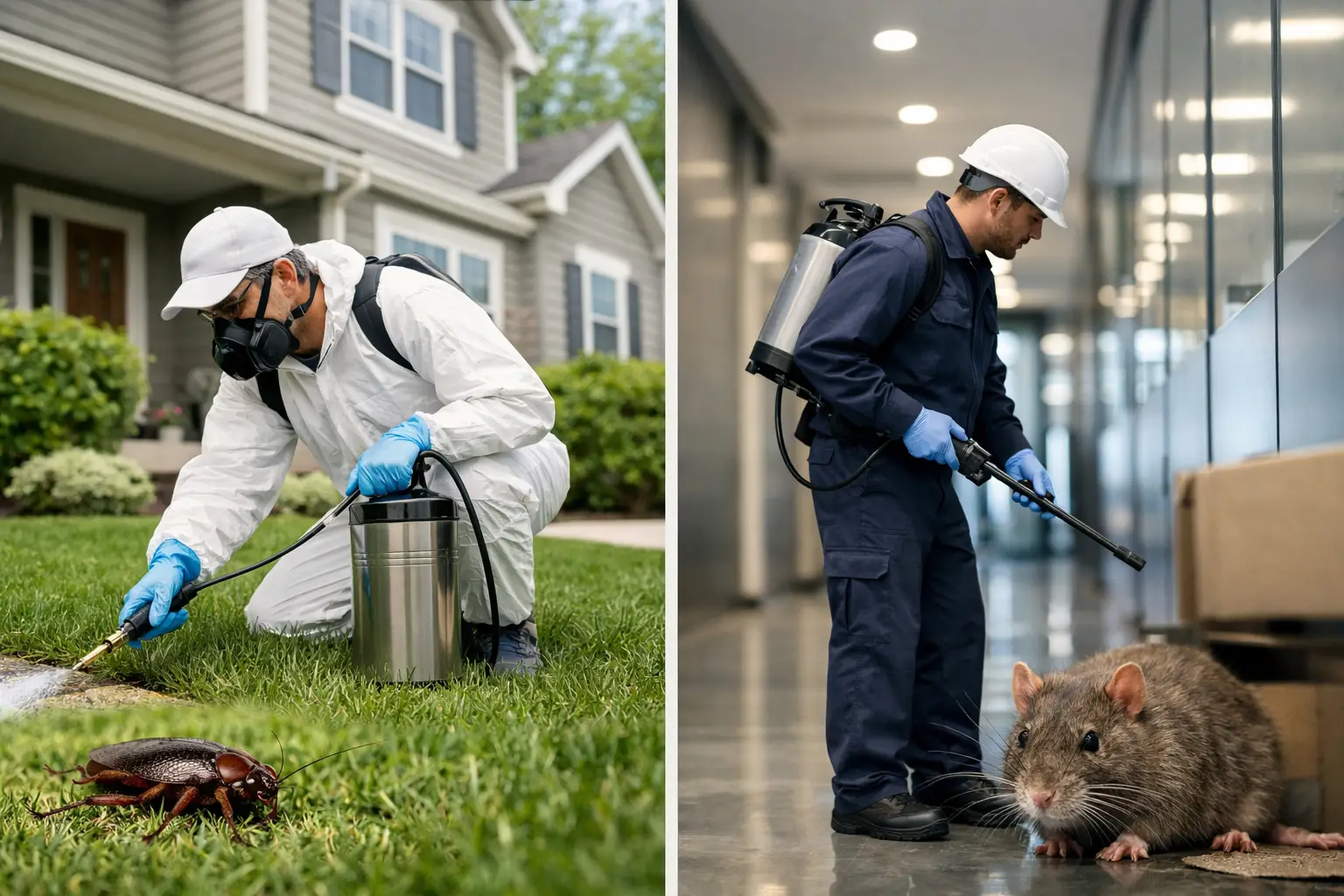
A trail of ants along the kitchen baseboard is frustrating. A mouse in a restaurant storage room is a business problem. That is why residential and commercial pest control should never be treated as a one-size-fits-all service. Homes and businesses both need fast relief, but the plan, pressure points, and follow-up work can look very different depending on the property.
In South King County, pest issues tend to build quietly before they become obvious. A few spiders in the garage, a wasp nest under the eaves, scratching in the attic, or cockroaches near a break room sink usually start small. The right pest control approach catches those problems early, treats them safely, and puts prevention in place so they do not keep coming back.
Why residential and commercial pest control needs a different approach
The goal is the same in every setting – get rid of the pests and keep them out. The challenge is that homes and businesses operate differently. A family wants protection that is safe for kids and pets, practical for everyday living, and affordable enough to maintain over time. A business owner or property manager also has to think about customers, staff, inventory, inspections, reputation, and downtime.
That difference matters. Rodent control in a home may focus on attic access, crawl spaces, food storage, and sealing utility gaps. In a commercial property, the same rodent issue may involve dumpsters, receiving areas, shared walls, floor drains, and after-hours treatment scheduling. You cannot fix both with the exact same service plan.
That is where a local company has an advantage. Pest activity in Kent, Covington, Maple Valley, Auburn, Renton, Bellevue, and South Seattle is shaped by our climate, our housing stock, and how properties are built and maintained. Moisture, wooded lots, aging structures, and seasonal temperature shifts all create openings for ants, rodents, wasps, spiders, mosquitoes, and more.
Common pest issues in homes
Residential pest problems usually start where comfort and routine meet. Kitchens attract ants and cockroaches. Garages and crawl spaces give spiders and rodents quiet shelter. Yards, fences, and rooflines create ideal conditions for wasps, bees, and squirrels. Bedrooms and upholstered furniture can become serious concerns when bed bugs are involved.
For homeowners, speed matters, but so does peace of mind. People want to know what is being used in and around the home, whether pets need to be kept away, and how long it will take to get back to normal. They also want a treatment plan that does more than handle what is visible that day.
A good home service typically starts with a clear inspection. The technician should identify where pests are active, where they are getting in, and what conditions are helping them stay. That may include moisture around the foundation, tree branches touching the roof, food sources in garages, or tiny entry points around doors and pipes. Treatment works best when it is paired with exclusion and prevention.
Ongoing plans often make more sense than waiting for the next outbreak. Ants, spiders, rodents, wasps, mosquitoes, and ticks are all easier to manage before populations spike. Recurring service can also save money over time because small issues are less expensive and less disruptive than large infestations.
What businesses need from commercial pest control
Commercial pest control is less about convenience and more about risk management. A pest issue in an office may damage employee comfort and morale. In a restaurant, warehouse, retail store, apartment complex, or healthcare-related setting, the stakes are higher. Pests can affect compliance, customer trust, and daily operations.
That is why commercial service needs to be organized, responsive, and discreet. Business owners usually need clear communication, reliable scheduling, treatment records, and practical recommendations that staff can actually follow. They also need a provider that understands how to solve a pest problem without creating unnecessary disruption.
For example, cockroach treatment in a commercial kitchen may require a detailed plan around cleaning schedules, harborage areas, and follow-up visits. Bird control at a retail center may involve exclusion and repair work rather than repeated surface treatments. Rodent control in a multi-tenant building may call for coordination across units, trash areas, and exterior entry points.
There is also the question of timing. Some businesses can only be serviced before opening, after closing, or during off-peak hours. Others need same-day or next-day help because waiting is not realistic. In those situations, fast response is not just a selling point. It is part of protecting the business.
The pests that cause the most trouble locally
In this area, ants are one of the most common calls for both homes and businesses. They find moisture, food, and hidden entry points quickly, especially in kitchens, bathrooms, and around foundations. Many people try store-bought products first, but partial treatments often scatter colonies and make the problem harder to track.
Rodents are another year-round concern. Mice and rats use small openings, rooflines, crawl spaces, and utility penetrations to get inside. Once established, they contaminate food areas, damage insulation and wiring, and reproduce fast. Removal is only half the job. Sealing entry points is what keeps the problem from restarting.
Wasps and bees tend to become urgent when nests are close to doorways, patios, play areas, or customer entrances. Spiders are common in garages, storage areas, eaves, and basements. Cockroaches are especially serious because they spread quickly and can be difficult to eliminate without a targeted plan. Termites, bed bugs, mosquitoes, ticks, and nuisance wildlife each bring their own challenges, which is why broad experience matters.
What to look for in residential and commercial pest control
Not every pest company is built to handle both homes and businesses well. Some are strong on basic spray service but weak on follow-up. Others can treat a problem once but do not address the root cause. If you are comparing providers, focus on what happens after the first visit as much as what happens during it.
A dependable pest control partner should offer a thorough inspection, clear recommendations, and realistic expectations. If a situation requires repeat visits, exclusion work, sanitation changes, or ongoing monitoring, that should be explained upfront. Quick fixes sound good in the moment, but pests often come back when the underlying conditions stay the same.
Safety should be part of the conversation too. For families, that means treatments that are appropriate for homes with children and pets. For businesses, it means using products and methods that are effective without creating unnecessary concern for staff, customers, or tenants. EPA-approved products and careful application matter because the goal is targeted control, not excessive treatment.
Follow-up is another big differentiator. Unlimited free follow-up visits can make a real difference, especially with pests that are persistent or seasonal. If activity continues after the initial treatment, you should not be left wondering whether you need to start over or pay again just to finish the job.
Why prevention usually beats one-time treatment
There are times when a one-time service is the right call. A visible wasp nest, a sudden ant invasion, or an isolated spider issue may be handled quickly and effectively in a single visit. But many pest problems are recurring by nature. If the conditions stay favorable, the pests return.
That is why maintenance plans are often the smarter option for homeowners and business owners who want fewer surprises. Regular service creates a protective barrier, catches seasonal issues early, and gives technicians a chance to spot developing problems before they become expensive. It also brings consistency, which matters when you are managing a family home, a rental property, or a business location.
For local customers, that practical approach is often the best fit. A family-owned company like Plateau Pest understands that people want service that is fast, affordable, and easy to trust. They want someone who shows up when promised, explains the issue clearly, and stands behind the work.
If pests are already active, the best time to act is now, not after the problem spreads to another room, unit, or building area. And if you have dealt with the same issue more than once, that is usually a sign you need more than a temporary fix. The right plan should give you relief today and fewer headaches next season.