
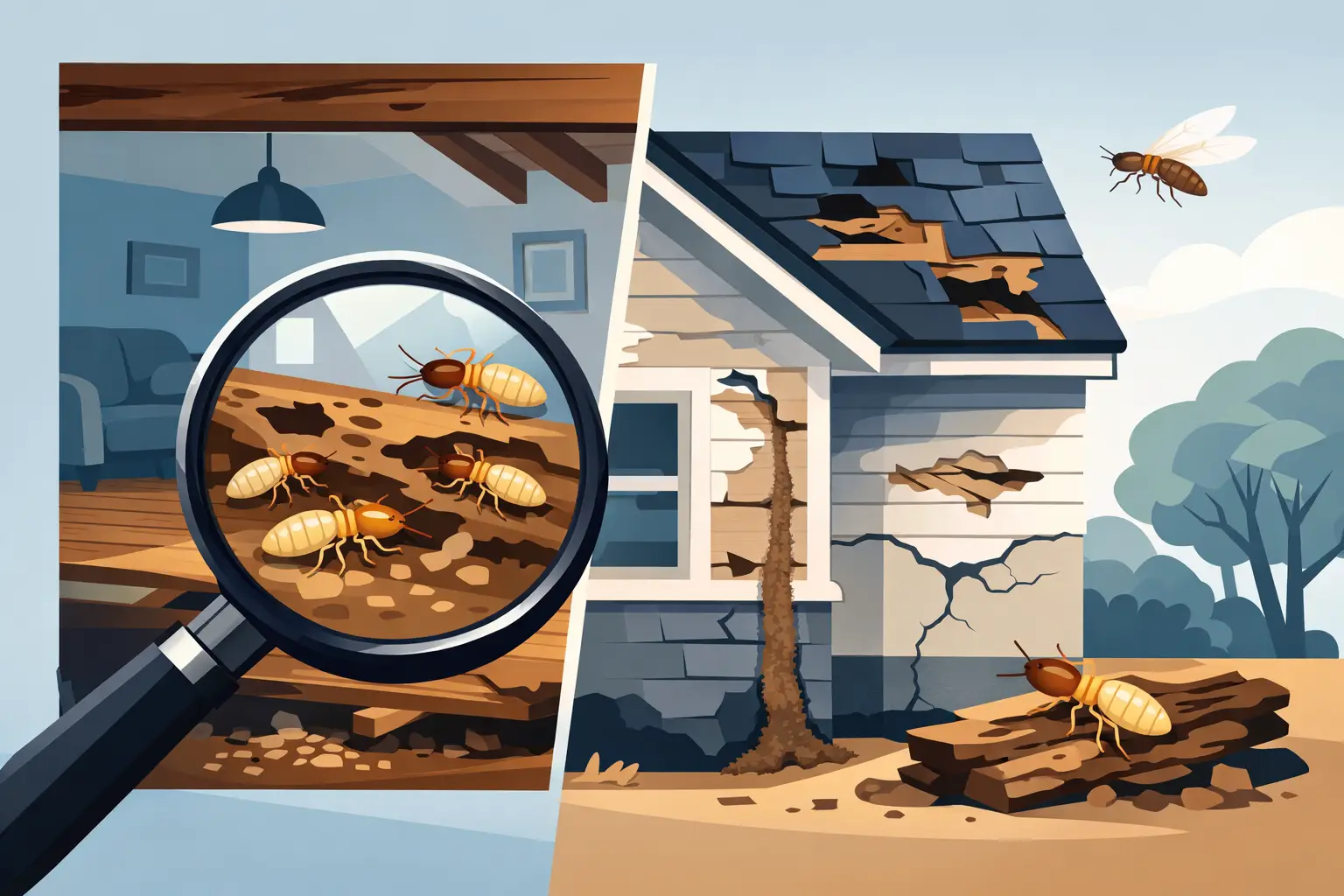
That door that suddenly sticks. The baseboard that looks a little bubbled. The soft spot in the floor you swear was not there last month. Early signs of termite damage often look small, but they can point to a much bigger problem hiding behind walls, under floors, or around crawl spaces.
For homeowners and property managers in South King County, that is what makes termites so frustrating. You usually do not see the insects first. You see the damage they leave behind. By the time the warning signs become obvious, termites may have been feeding on wood for months or longer. Knowing what to watch for can help you act fast, limit repair costs, and get the right treatment in place before the problem spreads.
Why termite damage is easy to miss
Termites are not like wasps or rodents. They do not announce themselves. They work quietly inside wood, often from the inside out, which means the surface can look mostly normal while the interior is already weakened.
That is why homeowners sometimes mistake termite activity for water damage, settling, or normal wear and tear. In real homes, it is not always clear at first glance. A warped window frame could be moisture. A blistered wall could be plumbing. But when several warning signs show up together, termites need to be on the list.
7 signs of termite damage
1. Wood that sounds hollow or feels soft
One of the clearest signs of termite damage is wood that no longer feels solid. If you tap on a trim board, window frame, door casing, or exposed beam and it sounds hollow, termites may have eaten the inner structure.
You might also notice wood that feels soft when pressed with a screwdriver or even a fingernail. In more advanced cases, the surface can break apart easily and reveal grooves or channels inside. That internal tunneling is a strong red flag.
2. Bubbling paint or blistered drywall
Termite damage is often confused with moisture damage because the surface can look similar. Paint may bubble, drywall may discolor, and walls can take on a swollen or uneven appearance.
The reason is simple. As termites feed behind a wall, they can introduce moisture and weaken the material enough to change how the surface looks. This does not always mean termites, but it is worth paying attention to if the issue appears in more than one spot or shows up alongside other warning signs.
3. Mud tubes along foundations or walls
Subterranean termites, the most common and destructive type in many areas, build pencil-width mud tubes to travel between the soil and the wood they are feeding on. These tubes help them stay moist and protected.
You may find them along foundation walls, crawl space supports, concrete seams, or where pipes enter the home. Fresh mud tubes are one of the most visible indicators of active termite movement. If you break one open and see creamy white insects inside, that is a strong sign you are dealing with a live colony.
Even if the tube looks empty, do not assume the problem is gone. Termites often rebuild and relocate, so the smartest move is to have the property inspected.
4. Tight-fitting doors and windows
When termites feed inside door frames and window frames, the wood can warp just enough to cause sticking. Homeowners often notice a door that suddenly drags, a window that no longer opens smoothly, or a frame that seems slightly out of shape.
This is one of those signs that can have more than one cause. Seasonal moisture and normal settling can do the same thing. But if the change happens along with soft wood, damaged trim, or visible tubes, termites become a much more likely explanation.
5. Sagging floors, loose tiles, or damaged trim
As termites weaken subflooring and structural wood, surfaces above can start to shift. A floor may feel spongy underfoot. Tile can loosen. Baseboards may crack or separate from the wall.
In homes with crawl spaces, these signs sometimes show up before anyone sees actual insects. Property managers may also notice tenants reporting floor movement, trim damage, or repeated issues in one section of a building. Those reports are worth taking seriously, especially in older structures or properties with moisture issues.
6. Small holes, mazes, or damaged wood grain
If termite-damaged wood is exposed, it may show thin surface cracks, tiny holes, or a layered, maze-like pattern inside. Unlike carpenter ants, termites eat the wood itself. Their galleries often follow the grain and leave behind a papery outer shell.
This kind of damage can appear in framing, deck supports, trim, fence posts, sill plates, or wooden elements near the soil line. If the wood looks intact on the outside but crumbles with light pressure, that is not normal aging.
7. Swarmers or discarded wings
Termite swarmers are the winged reproductive termites that emerge when a colony is mature. Homeowners often spot them near windowsills, doors, or light sources, especially during warmer periods when conditions are right.
Sometimes you will not see the swarm itself. Instead, you will find piles of delicate, equal-sized wings left behind after the termites shed them. That is a major warning sign. It does not always mean the termites are actively feeding inside that exact wall, but it does mean a colony is nearby and needs professional attention.
Where termite damage usually shows up first
Termites go where wood and moisture meet. In practical terms, that means the earliest signs often appear in crawl spaces, basements, utility penetrations, garages, window trim, door frames, and lower sections of exterior walls.
Homes with leaking hose bibs, poor drainage, wood-to-soil contact, or chronic moisture around the foundation are at higher risk. The same goes for older decks, fences, sheds, and outbuildings with untreated or weathered wood.
For commercial properties, vulnerable areas often include storage rooms, rear service entries, landscaping edges, and any structure with hidden framing and limited routine inspection.
What termite damage is commonly mistaken for
Not every damaged board means termites. Water damage, rot, carpenter ants, and even routine settling can create similar symptoms. That is why guessing usually costs more than checking.
The key difference is pattern. A single damp window sill may point to condensation or a leak. But soft wood, mud tubes, sticking doors, and discarded wings together tell a different story. If you are seeing a cluster of these signs, it is time to move quickly.
What to do if you notice signs of termite damage
Start by avoiding the urge to tear everything open yourself. Disturbing the area can make it harder to assess the problem, and DIY sprays rarely address the colony where it lives.
Instead, document what you see. Take clear photos of mud tubes, damaged wood, bubbling paint, or wings. Make note of where the issue appears and whether it seems to be spreading. Then schedule a professional termite inspection.
A trained inspection helps answer the questions that matter most. Is the infestation active or old? How far has it spread? Is the damage cosmetic, or could structural repairs be needed? Those answers determine the right next step.
For local homeowners, getting a fast inspection matters. The longer termites stay active, the more expensive the repair side can become. A family-owned company like Plateau Pest can help identify the issue, recommend treatment, and put follow-up protection in place so the problem does not keep coming back.
When to call right away
Some situations should not wait. If you see live swarmers indoors, active mud tubes, sagging floors, or wood that gives way under light pressure, make the call as soon as possible.
The same goes for landlords and property managers dealing with tenant reports of soft floors, warped trim, or repeated moisture-related wall damage. Waiting for a more obvious sign usually means more wood has already been compromised.
A practical way to protect your home
The most expensive termite problem is usually the one that sat unnoticed. If something in your home looks off and you cannot quite explain it, trust that instinct. Small signs have a way of turning into major repairs when they are ignored, and a quick inspection now is often the easiest way to protect both your property and your peace of mind.