
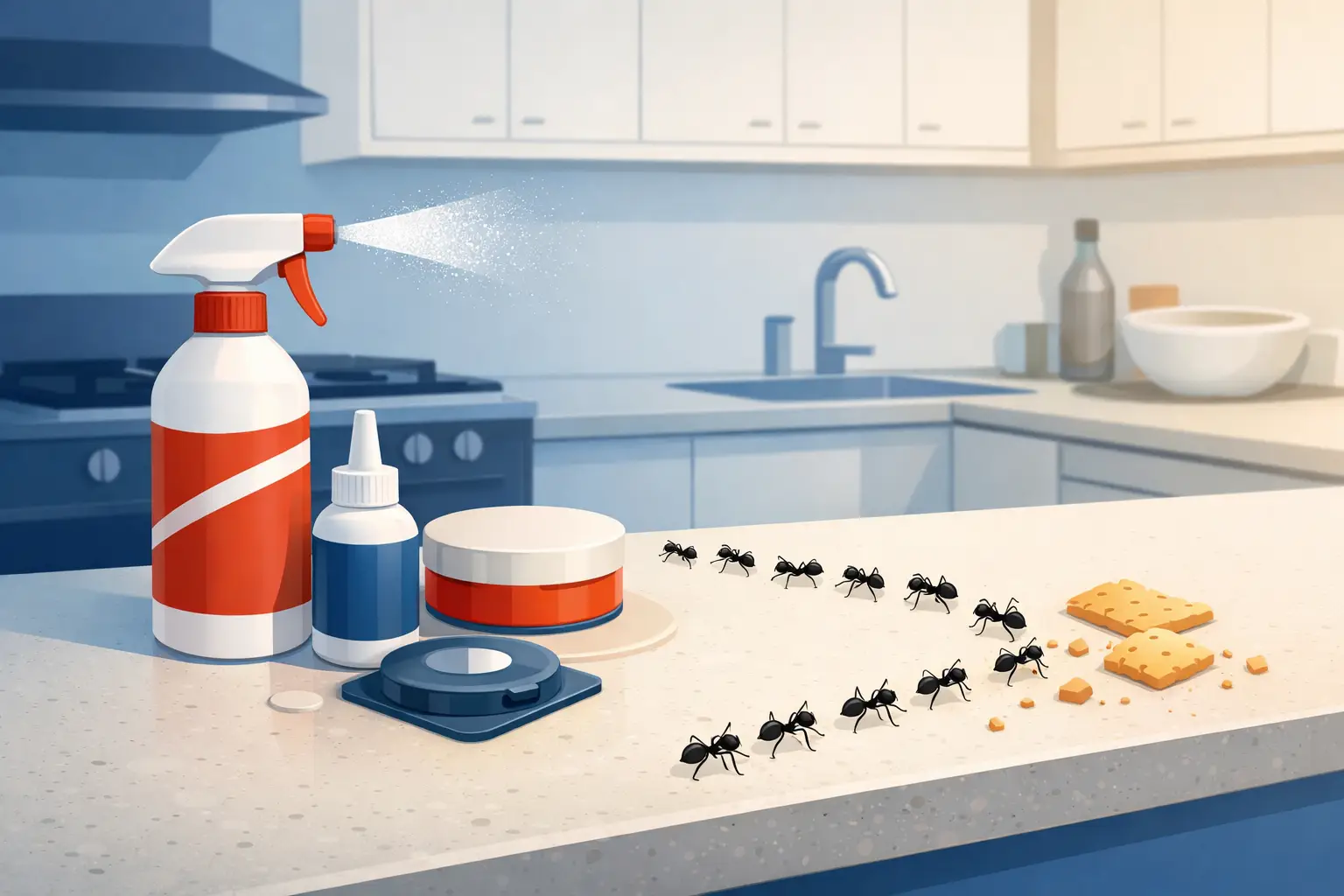
You usually notice kitchen ants at the worst possible moment – around the coffee maker at 6 a.m., trailing across the counter before guests arrive, or clustering near the sink after dinner. If you are searching for the best ant killers for kitchens, the right answer depends on one thing most people miss: whether you need to kill the ants you see, or eliminate the colony sending them in.
That distinction matters. A spray can clear the counter fast, but if it kills worker ants before they carry treatment back to the nest, the problem often comes right back. In a kitchen, where food, water, kids, and pets all affect your options, choosing the wrong product can turn a small nuisance into a repeating headache.
What makes the best ant killers for kitchens different?
Kitchen ant control has two jobs at once. It needs to reduce activity quickly, and it needs to do it without creating unnecessary risk around food prep surfaces, dishes, or pet bowls.
That is why the best kitchen products are usually not the strongest-smelling sprays on the shelf. In many homes, bait is the better first move because it targets the source. Worker ants take the bait back to the colony, which gives you a better chance of stopping the infestation instead of chasing trails from room to room.
Still, bait is not always the only answer. If ants are pouring in around a window, under the sink, or across a pantry shelf, a combination approach may make more sense. You may need a bait to handle the colony and a limited, carefully placed non-repellent treatment in cracks and entry points. It depends on the species, the size of the infestation, and how long the problem has been active.
The best ant killers for kitchens by type
Ant bait stations
For most kitchen infestations, bait stations are the most reliable place to start. They are enclosed, easier to place out of reach, and designed to attract foraging ants without leaving residue across your counter.
The trade-off is speed. Baits are rarely dramatic on day one. In fact, you may see more ants at first because the bait is doing its job and drawing workers in. That can feel frustrating, but it is often a sign the treatment is working. If you wipe away every ant immediately or move the bait too soon, you can interrupt the process.
Gel baits
Gel baits can work very well in kitchens because they fit into tight areas where ants travel, such as along a backsplash seam, behind appliances, or near plumbing penetrations. They are often more flexible than plastic bait stations and can be highly effective when placed correctly.
The downside is placement and cleanup. In a busy kitchen, gel can be disturbed by cleaning, moisture, children, or pets. It also needs careful application. Too much is messy, and putting it in the wrong place can make the area less safe or less sanitary.
Ant sprays
Sprays have a role, but usually not the leading one. If you need immediate relief for visible ants on a windowsill or a line moving across the floor, a kitchen-safe ant spray can reduce activity fast.
The problem is that many sprays are repellent products. They kill on contact, but they can also scatter the colony or cause ants to reroute into walls, cabinets, or other rooms. In kitchens, sprays should be used sparingly and according to label directions, especially anywhere near food prep areas.
Ant powders and dusts
Dusts can be effective in voids, wall gaps, and other hidden spaces, but they are generally not the first choice for exposed kitchen areas. In the wrong spot, they can drift, become visible, or create cleanup concerns.
For a homeowner, this is usually the category where professional help makes the most sense. A licensed technician can place products in concealed areas where they work well without creating unnecessary exposure in the kitchen itself.
What to look for before you buy
Not every ant problem responds to the same product. Some ants prefer sweets, while others are drawn to grease or protein. If a bait is ignored, it may not be because the product is bad. It may simply be the wrong food base for that species or time of year.
Safety is the next filter. In a kitchen, look for products specifically labeled for indoor residential ant control and follow all instructions around food contact surfaces. If you have toddlers, pets, or a business setting with employee traffic, enclosed or precisely applied treatments tend to be the better fit.
Then look at placement. A good product in the wrong location will underperform every time. Ants usually travel along edges, plumbing lines, cabinet corners, window frames, and gaps where walls meet counters. Treating the middle of the room while ignoring the trail route will not get you far.
Common mistakes that make kitchen ants harder to eliminate
The biggest mistake is over-cleaning the bait area after placement. You should keep the kitchen sanitary, but if you remove the bait, crush every foraging ant, or spray over the trail, you may stop the transfer that was supposed to reach the colony.
Another common mistake is using multiple products at once without a plan. For example, placing bait and then spraying a strong repellent around it can keep ants from taking the bait at all. It feels proactive, but the treatments can work against each other.
Sealing entry points too early can also backfire. Exclusion is smart, but if active ants are still foraging inside wall voids or under cabinets, closing one route may just force them to appear somewhere else in the kitchen.
When DIY works, and when it usually does not
If you have a light trail of ants near one area, no sign of nesting indoors, and the activity just started, DIY treatment often works. A well-placed bait, improved sanitation, and some moisture control around the sink may solve the issue.
If ants keep returning every few days, show up in multiple rooms, or seem to disappear and reappear after each treatment, the problem is usually larger than the kitchen surface activity suggests. Moisture ants, odorous house ants, and carpenter ants can all behave differently, and misidentifying them leads to wasted time and repeat purchases.
That is especially true in South King County, where wet weather, wooded lots, crawl spaces, and aging exterior seals give ants plenty of ways into homes. What looks like a kitchen problem may actually start outside around the foundation, under siding, or near landscaping.
A safer, more effective approach for families and busy homes
In homes with children and pets, the best ant killers for kitchens are the ones that solve the problem without turning the room into a chemistry project. That usually means targeted treatment, not heavy treatment.
A professional approach often combines inspection, species identification, selective product use, and prevention steps that reduce future activity. That might include addressing moisture near plumbing, finding hidden entry points, and treating the exterior source so ants stop reaching the kitchen in the first place.
For homeowners and property managers, that saves more than frustration. It can reduce repeat infestations, cut down on trial-and-error product purchases, and avoid the cycle of spraying every time ants reappear.
Plateau Pest handles kitchen ant problems with EPA-approved products, fast response times, and unlimited free follow-up visits, which matters when one treatment gets things moving but the colony needs continued pressure.
How to get better results right away
Start by resisting the urge to spray everything you see. Watch where the ants are entering, where they are trailing, and whether they are attracted to sweet spills, grease, water, or pet food. That tells you more than the ant count alone.
Clean up accessible food sources, fix obvious leaks, and place the right treatment close to the trail, not in the center of open space. Give bait time to work unless the label says otherwise. If activity increases briefly, that is often normal.
If the ants return after a full treatment cycle, spread to other rooms, or appear around wall voids, window frames, or under cabinets, it is time to stop guessing. At that point, the best product is usually not another store-bought option. It is a proper inspection that finds out why the ants are there and what will keep them out.
A clean kitchen should not come with a permanent ant trail. The fix is usually simpler once the treatment matches the way ants actually behave.