
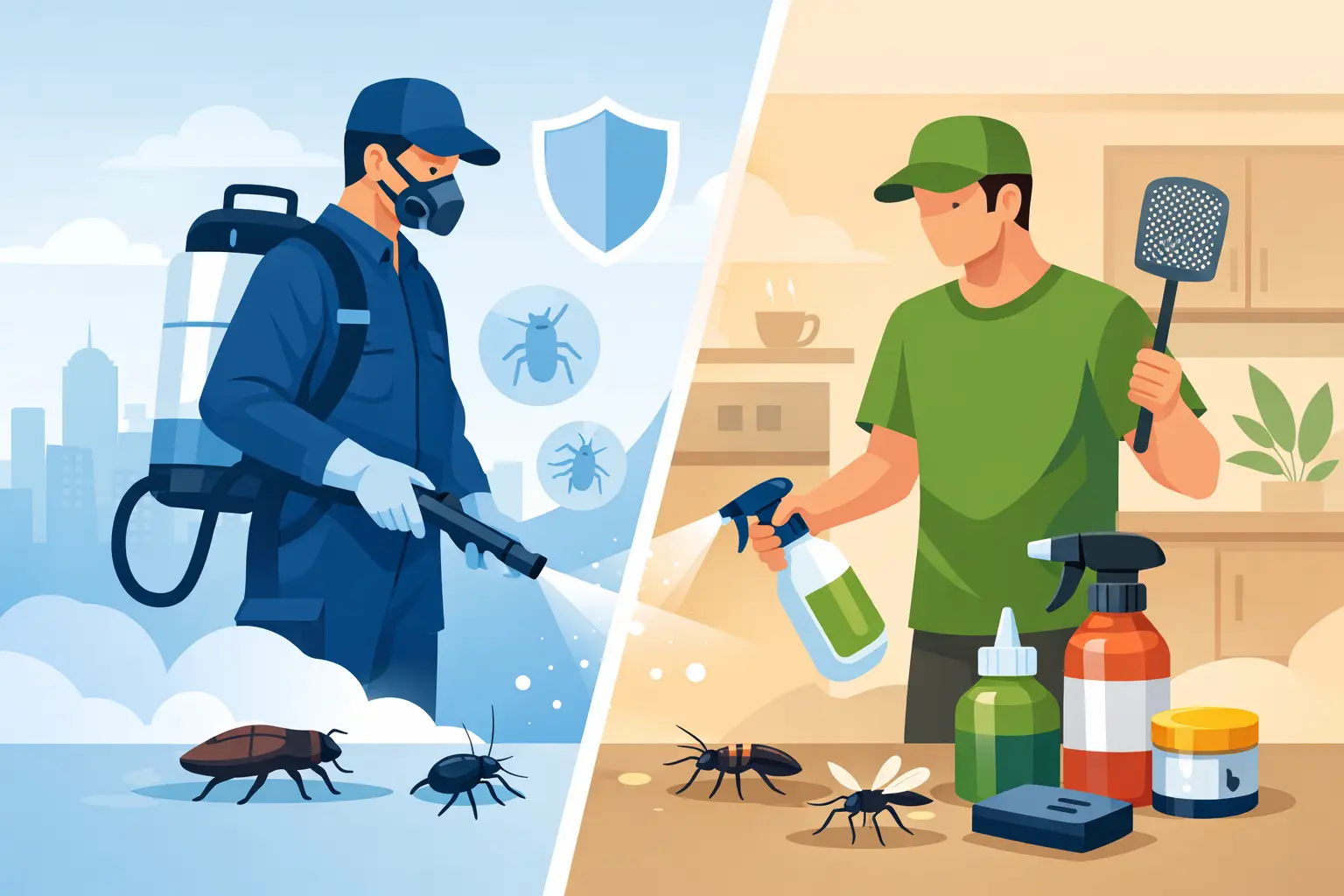
You spot a trail of ants in the kitchen, hear scratching in the wall, or find a wasp nest under the eaves, and the same question comes up fast: professional vs diy pest control – which one actually makes sense for your home or business? The honest answer is that it depends on the pest, the size of the problem, and how much risk you are willing to take with your time, safety, and property.
For some small, early-stage issues, a do-it-yourself approach can help. For others, DIY turns into repeat store runs, wasted weekends, and pests that keep coming back. If you are trying to make the smart call, it helps to look beyond the price tag on a spray bottle and focus on results.
Professional vs DIY Pest Control: What Are You Really Paying For?
DIY usually looks cheaper at first. You buy traps, bait, granules, or a can of spray, apply it yourself, and hope the problem stops there. If the issue is minor and you caught it early, that may be enough.
Professional service costs more upfront, but you are not just paying for products. You are paying for inspection, correct pest identification, treatment strategy, safer application, and follow-up. That matters because many pest problems are misdiagnosed. Ants are a good example. Different species behave differently, and the wrong treatment can scatter a colony instead of eliminating it.
The same goes for rodents. Setting a few traps is easy. Finding where mice or rats are entering, understanding why they are nesting, and closing those access points is where real control happens. Without that step, the problem often comes right back.
When DIY Pest Control Can Work
There are cases where DIY is reasonable. If you are dealing with a few pantry pests, a small number of visible ants, or a single spider issue, basic sanitation and store-bought products can sometimes solve it. This works best when the infestation is limited, the pest is easy to identify, and there is no major health or structural risk involved.
DIY can also make sense as a short-term response. You may need immediate relief until a professional can inspect the property, especially with crawling insects inside living areas. In that situation, simple steps like cleaning up food sources, sealing dry goods, reducing moisture, and placing the right traps can help reduce activity.
That said, DIY works best when expectations are realistic. It is often control, not full elimination. If pests are deeply established, hidden in wall voids, nesting outdoors, or entering through multiple points, retail products rarely solve the whole problem.
When Professional Pest Control Is the Better Call
Some pest issues should move out of the DIY category quickly. Rodents, bed bugs, cockroaches, termites, stinging insects near entryways, and recurring ant infestations usually need a professional plan. These pests spread fast, hide well, and often require more than one treatment.
There is also a safety issue. Wasp nests under rooflines, bee activity near family spaces, and rodent infestations in attics or crawl spaces put people at risk. So do misused pesticides. More product does not mean better results. In some cases, overapplication makes the problem worse or creates unnecessary exposure for children, pets, and employees.
For commercial properties, the bar is even higher. A restaurant, office, warehouse, or multifamily property cannot afford trial and error. Pest activity affects health standards, reputation, tenant satisfaction, and day-to-day operations. Professional service is usually the more practical choice because it is built around prevention as much as treatment.
The Hidden Cost of DIY
The biggest argument for DIY is cost, but that only holds up if it works the first time. Many property owners end up buying multiple products, replacing damaged food, cleaning droppings, repairing chewed materials, and spending hours chasing a problem that was never fully addressed.
Rodents are a common example. A few bait stations or snap traps may catch some activity, but if the entry points stay open, the issue continues. The same pattern shows up with cockroaches and ants. You may kill what you see while the colony or nesting site remains untouched.
There is also the cost of delay. The longer pests stay active, the more damage they can cause. Termites and rodents can affect structure. Bed bugs spread from room to room. Wasp nests get larger. What starts as a manageable issue can become a much more expensive one if the wrong solution buys only temporary relief.
Safety Matters More Than Most People Think
One of the biggest differences in professional vs diy pest control is how treatment is handled around people, pets, and the environment. Most homeowners are not applying products every day, so they may not know which materials are right for a specific pest, where they should be applied, or what should never be mixed.
A professional approach should start with inspection and targeted treatment, not blanket spraying. That means using the least amount of product needed, placing it where it works best, and combining it with non-chemical solutions like exclusion, sanitation, and habitat reduction. For families and businesses in South King County, that matters. People want effective pest control, but they also want to know it is being handled responsibly.
Eco-conscious treatment does not mean weak treatment. It means using EPA-approved products correctly and pairing them with practical prevention steps that reduce future pest pressure.
Professional vs DIY Pest Control for Common Local Pests
In this area, pest pressure changes with the season, and not every pest should be treated the same way. Ants often increase in warmer months and after weather shifts. DIY bait can help with minor activity, but large or recurring infestations usually need species-specific treatment and exterior prevention.
Wasps are another example where DIY can go sideways fast. A visible nest may look simple to remove, but disturbing it without the right equipment or timing can create a dangerous situation. The same goes for bees, where removal should be handled carefully and responsibly.
Rodents are active year-round and become a bigger issue as temperatures drop and they look for shelter indoors. Store-bought traps may reduce numbers, but long-term control usually depends on inspection, exclusion work, and follow-up.
Spiders, cockroaches, mosquitoes, ticks, and bed bugs each have their own pattern. Some respond well to targeted treatment and maintenance. Others are hard to eliminate without professional tools and a repeat service plan. If the pest keeps returning, that is usually a sign the source has not been solved.
Why Follow-Up Changes the Outcome
This is where many DIY efforts fall short. Pest control is rarely one-and-done, especially with recurring pests or larger infestations. The first treatment may knock down visible activity, but eggs hatch, hidden nesting sites remain active, and seasonal conditions change.
Professional service should account for that. A good plan includes monitoring, re-treatment if needed, and prevention that keeps pressure down over time. That is one reason many homeowners and property managers choose recurring service instead of waiting for every problem to become urgent.
For a family-owned company like Plateau Pest, follow-up is not an extra detail. It is part of what gives customers peace of mind. Fast response helps in the moment. Ongoing support helps keep the issue from becoming a pattern.
How to Decide What Is Right for You
If the pest issue is small, clearly identified, and low risk, DIY may be worth trying first. Just keep the scope realistic. If the problem is spreading, returning, causing damage, or creating safety concerns, professional service is usually the faster and more affordable path in the long run.
A simple way to think about it is this: if you are treating symptoms, DIY may help. If you need the source found and fixed, professional service is the better fit. That is especially true for homes with children or pets, rental properties, and businesses that cannot afford downtime or repeat infestations.
The goal is not just to kill pests you can see. It is to stop the activity, prevent it from coming back, and protect the space you care about. When that is the standard, the cheapest option is not always the one that saves the most.
If you are weighing your next step, trust what the situation is telling you. A single sighting is one thing. A pattern is another. The sooner you match the response to the real problem, the easier it is to get your home or business back to normal.