
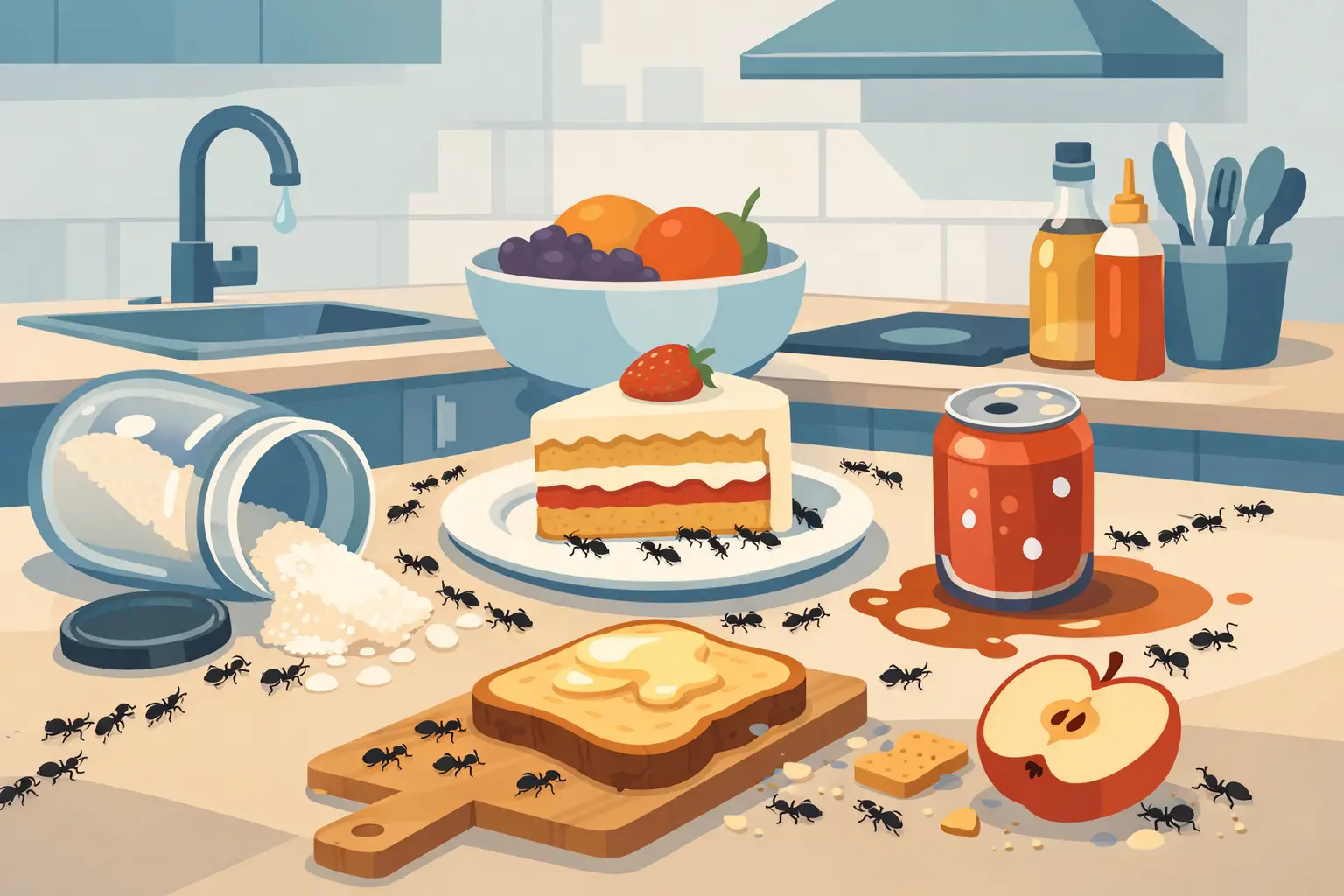
A few ants near the sink can turn into a steady kitchen trail surprisingly fast. Knowing what attracts ants in kitchens helps you remove the reason they came in, not just the ants you see on the counter. In South King County, changing weather and damp conditions often push ants indoors looking for food, water, and a protected place to travel.
Ants are persistent, but an ant problem is not always a sign that your kitchen is dirty. A tiny spill, a damp cabinet, or a gap around a pipe may be enough to bring a scouting ant inside. Once it finds a reliable resource, it leaves a scent trail that guides other ants to the same spot.
What Attracts Ants in Kitchens Most Often
Crumbs, spills, and overlooked food residue
Ants have an excellent ability to locate small food sources. The obvious culprits are cookie crumbs, dropped cereal, sticky juice rings, and food left on counters. But the food that draws ants is often less visible: a little syrup on a bottle, grease around a stove burner, residue under a toaster, or a splash of pet food near a bowl.
Sweet foods attract many common household ants, especially sugar, fruit, soda, honey, and baked goods. Others are more interested in protein or fat, so they may gather near meat scraps, cooking oil, peanut butter, cheese, or greasy packaging. That is why a kitchen can have ants even when sweets are put away.
Trash and recycling can provide the same reward. A rinsed-out beverage can, an unsealed garbage bag, or a recycling bin with food residue can keep ants returning. Wiping the outside of containers matters too, particularly if bottles or jars have drips around the lid.
Water and hidden moisture
Food gets attention, but water is often the reason ants stay. Kitchens offer plenty of moisture sources: a slow leak under the sink, condensation around plumbing, a damp sponge, standing water in a dish rack, or a pet water bowl that is constantly available.
In the Kent, Renton, Auburn, and Covington area, damp weather can make indoor moisture especially appealing. Ants may come in during rainy periods when outdoor conditions disrupt their nesting areas, then settle into a routine around a leaky pipe or wet cabinet. If you see ants most often near the sink, dishwasher, refrigerator, or coffee maker, check for moisture before assuming food is the only issue.
Easy entry points near the kitchen
Ants do not need a large opening. They can enter through gaps around utility lines, cracks in a foundation, worn weatherstripping, window frames, and spaces where cabinets meet walls. Kitchen plumbing creates a common route because pipes pass through walls and floors, often leaving small gaps behind cabinets.
A visible ant trail may not lead to the actual entry point. It can begin outside, travel through a wall void, and emerge near a countertop or baseboard. Spraying the line of ants may make the trail disappear for a day, but it will not necessarily stop the colony from sending more scouts through another route.
Pantry items and pet food
Open bags of flour, sugar, cereal, rice, and snacks are easy targets. Even closed cardboard boxes are not always enough protection, especially when a package has a small tear or crumbs have collected on the shelf. Store dry goods in clean, tightly sealed containers and wipe shelves before putting food back.
Pet food is another frequent draw. Leaving kibble out all day gives ants a dependable food source, while wet food can attract them quickly in warm conditions. If possible, serve meals at set times, clean up leftovers, and wash bowls regularly. It is a small change that can make a noticeable difference.
Why Ant Trails Keep Returning
When a scout ant finds food or water, it communicates the location through chemical scent trails. Other ants follow that trail, reinforce it, and create the familiar line across a counter, floor, or backsplash. Removing the ants you see does not always remove the trail or address the nest.
This is also why cleaning after an ant sighting matters. Wipe surfaces with soapy water and clean along the trail, including baseboards and cabinet edges. The goal is to remove food residue and disrupt the scent path at the same time.
It depends on the species and the location of the colony, but many kitchen ant problems begin outdoors. Colonies may nest in soil, mulch, landscaping, decaying wood, wall voids, or areas near the foundation. They enter when conditions outside change or when your kitchen offers an easier meal than they can find nearby.
How to Make Your Kitchen Less Appealing to Ants
A good prevention routine focuses on sanitation, moisture control, and exclusion. You do not need a spotless showroom kitchen. You do need to remove the small, repeatable resources that keep ants coming back.
- Wipe counters, stovetops, tables, and appliance surfaces after meals, paying close attention to sticky or greasy residue.
- Sweep or vacuum under the table, around the stove, and beneath small appliances where crumbs collect.
- Keep pantry staples, snacks, and pet food in sealed containers instead of open bags or thin cardboard boxes.
- Empty kitchen trash regularly and rinse food containers before placing them in recycling.
- Repair drips under sinks, dry wet cabinets, and avoid leaving damp sponges or standing water out overnight.
- Seal gaps around pipes, doors, windows, and baseboards after identifying likely entry routes.
Be cautious with store-bought sprays. A contact spray can kill ants on the surface, but it may not reach the colony. In some cases, disturbing a trail without treating the source can cause ants to scatter and show up elsewhere in the kitchen. Bait-based solutions can be useful when used correctly, but placement and product choice matter. Keep any pest control product away from children, pets, food-preparation surfaces, and areas where it could be disturbed.
When a Kitchen Ant Problem Needs Professional Help
A few occasional ants may respond to cleaning and sealing, especially if you catch the issue early. It is time to call for help when you see trails every day, ants return after repeated cleaning, or the activity appears to come from walls, cabinets, or multiple rooms.
You should also take ongoing moisture seriously. Carpenter ants are larger than many common ants and are often associated with damp, damaged, or decaying wood. They do not eat wood like termites, but their nesting activity can point to a moisture issue that deserves prompt attention. A professional inspection can help identify the ant type, likely nesting area, and conditions that are supporting activity.
For homes, rental properties, and businesses in South King County, Plateau Pest provides practical ant control with family- and pet-conscious treatment options, fast scheduling, and unlimited free follow-up visits on recurring plans. The right treatment should address active ants while helping prevent the next trail from forming.
If ants keep finding their way into the kitchen, start with the sink cabinet, pantry shelves, pet feeding area, and the edges where walls meet floors. Those few minutes of inspection often reveal the food, moisture, or opening that turned one scout ant into a recurring problem.