
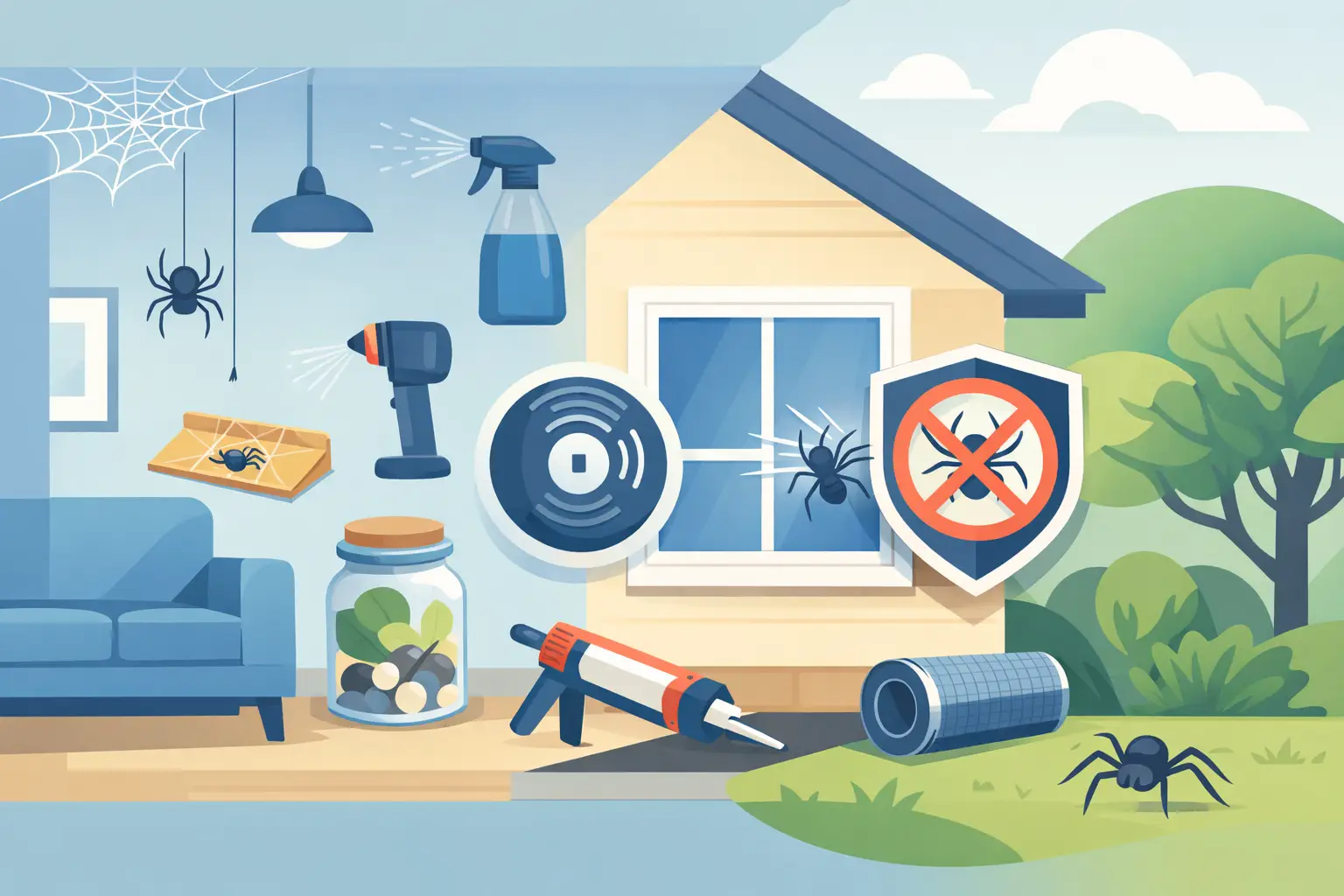
A spider in the corner of the laundry room may not seem urgent. But when webs keep reappearing near windows, storage boxes, basement corners, or exterior doors, it is a sign that your home is offering spiders what they need: quiet shelter and a steady food source. The best ways to keep spiders out are less about chasing individual spiders and more about making the property less inviting in the first place.
For homeowners in Kent, Covington, Maple Valley, Auburn, Renton, Bellevue, and South Seattle, spider activity often increases as seasonal weather changes. Spiders move closer to buildings for cover, while the insects they eat gather around lights, moisture, and entry points. A few practical prevention steps can make a real difference.
The Best Ways to Keep Spiders Out Start Outside
Spiders usually enter from the exterior, so your first line of defense is the area around the home. Walk the perimeter and look closely at foundation gaps, window frames, utility lines, vents, door thresholds, and siding. Even a narrow opening can become an easy path indoors.
Seal visible cracks with an appropriate exterior-grade sealant. Add or replace weatherstripping on doors that have daylight showing around the edges, and make sure door sweeps sit close to the threshold. Repair torn window screens and check that vent covers are secure. These steps also help keep out ants, rodents, and other occasional invaders.
Pay attention to the areas spiders use as hiding places. Move firewood, stacked lumber, planters, cardboard, and stored equipment away from the exterior walls when possible. Keeping a clear space between landscaping and the foundation makes it harder for spiders to settle close to entry points.
Trim Back Plants and Reduce Exterior Shelter
Dense shrubs, ivy, and tree branches touching the house can act as bridges for spiders and the insects they hunt. Trim plants back from siding, windows, and rooflines, especially around porches and ground-level windows. You do not need a bare yard, but plants should not press against the structure.
Leaf litter, heavy mulch, and neglected corners around decks or sheds can also create damp, protected hiding spots. Keep these spaces reasonably tidy and avoid piling yard debris against the home. If you have a crawl space or detached garage, include those areas in your seasonal cleanup.
Control the Insects That Attract Spiders
Spiders stay where food is available. That means a spider problem can sometimes be an insect problem first. Flies, moths, ants, mosquitoes, and small beetles are all potential food sources, so reducing them makes your home less appealing to spiders.
Exterior lighting is a common factor. Bright porch lights attract flying insects after dark, and spiders may build webs nearby to take advantage of the traffic. Consider using warmer-colored bulbs or motion-activated lights near doors, patios, and garages. You can also position decorative lighting farther from exterior doors and windows when practical.
Inside, keep food sealed, wipe crumbs from counters, and avoid leaving pet food out overnight. Moisture matters too. Repair leaking pipes, address damp spots under sinks, and use proper ventilation in bathrooms and laundry areas. These habits help limit the small insects that can support spider activity.
Keep Indoor Hiding Spots to a Minimum
Spiders prefer quiet spaces where they are unlikely to be disturbed. Basements, garages, closets, attics, crawl spaces, and storage rooms are common trouble spots because clutter gives them cover.
Replace cardboard boxes with sealed plastic bins for long-term storage when you can. Cardboard holds moisture, provides tight seams, and is easy for spiders and insects to hide around. Keep stored items slightly off the floor and leave enough space to inspect walls and corners during routine cleaning.
Vacuum regularly along baseboards, behind furniture, under beds, and in room corners. Remove webs and egg sacs as you find them, then empty the vacuum outside. A regular cleaning schedule will not eliminate every spider, but it disrupts the places where they settle and reproduce.
Be Careful When Bringing Items Inside
Spiders can hitch a ride indoors on firewood, outdoor furniture, plants, holiday decorations, and garage storage. Before bringing these items inside, give them a quick inspection. Shake out outdoor cushions, check beneath planters, and avoid carrying firewood directly into living areas until you are ready to use it.
This is particularly useful in fall, when people begin pulling stored decorations and seasonal equipment from garages, sheds, and crawl spaces. Gloves are a smart choice when moving boxes or reaching into dark, undisturbed areas.
Use Sticky Monitors to Find Activity Areas
Sticky traps are a simple, pesticide-free way to monitor spider activity. Place them along walls where spiders travel, such as behind furniture, near garage doors, in closets, or beneath sinks. Keep them away from areas accessible to children and pets.
These traps are most useful as a monitoring tool. If several traps repeatedly catch spiders in the same location, investigate nearby gaps, moisture, clutter, or insect activity. The goal is not to rely on traps forever. It is to identify where prevention work is needed most.
Avoid Home Remedies That Create Bigger Problems
Many homeowners try strong-smelling sprays, essential oils, or random pesticide products first. Some may temporarily disturb spiders, but they rarely solve an established issue on their own. Oils can stain surfaces or irritate sensitive pets and family members, while over-the-counter insecticides may be used in the wrong location or at the wrong rate.
A better approach is to focus on exclusion, sanitation, moisture control, and targeted treatment when it is needed. For most common house spiders, prevention is more effective than repeatedly spraying visible webs.
It also helps to keep expectations realistic. Seeing an occasional spider does not always mean there is an infestation. Homes near greenbelts, wooded areas, water, or active landscaping may naturally see more seasonal spider activity. The concern is recurring webs, frequent sightings, egg sacs, or spiders appearing in multiple rooms despite regular cleaning.
When Professional Spider Control Makes Sense
Call a professional when spider activity is persistent, you are concerned about venomous spiders, or you cannot locate the entry points. Property managers and business owners may also need prompt support when webs appear around entrances, storage spaces, customer areas, or work zones.
A trained pest professional can inspect the property, identify likely harborages, address exterior pressure, and recommend exclusion repairs that fit the building. This is especially valuable for homes with complex rooflines, older foundations, crawl spaces, or recurring pest issues that bring spiders back.
Plateau Pest provides practical spider control for South King County homes and businesses, with responsive service and follow-up support designed to keep prevention on track. Professional treatment should complement the everyday steps that make spiders less likely to return.
A clean corner and a removed web are helpful, but the lasting win is closing the gap that let spiders in and removing the insects that gave them a reason to stay. Start with one exterior walk-around this week, then turn the fixes you find into a simple seasonal routine.